In A Fool’s Errand, the fate of both gods and player characters is all in the cards.
A tarot RPG driven by interpretation and cosmic fallout.

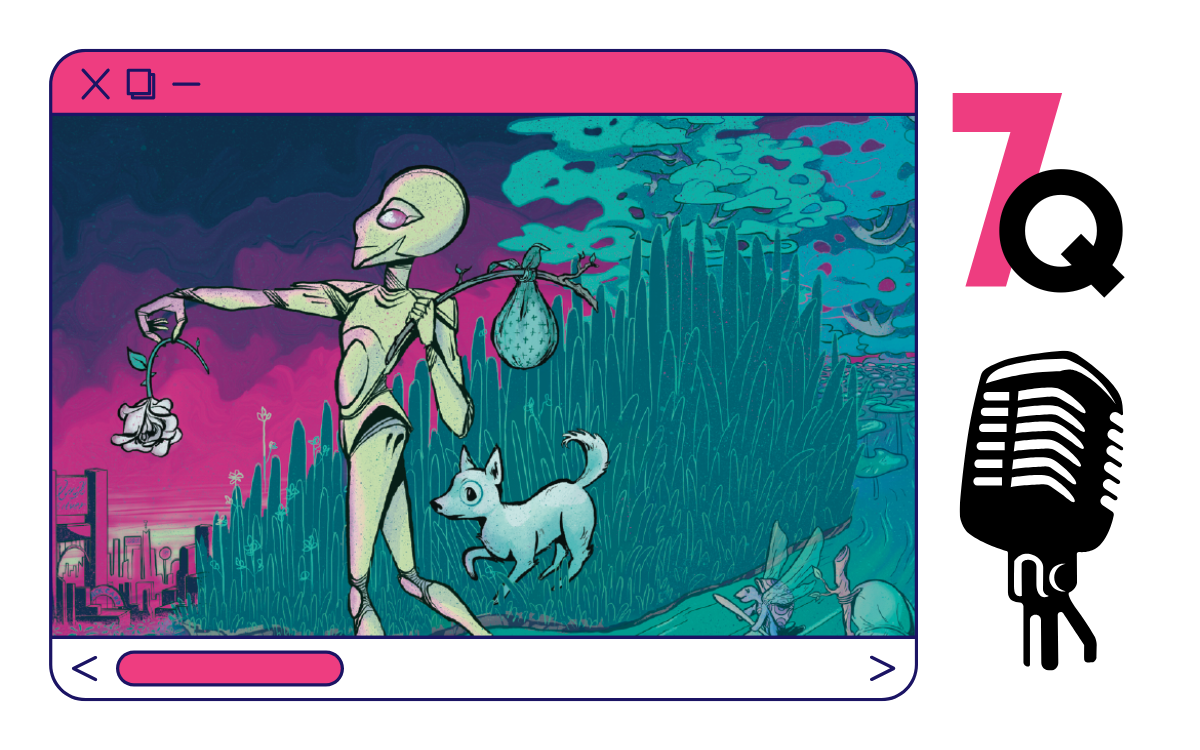
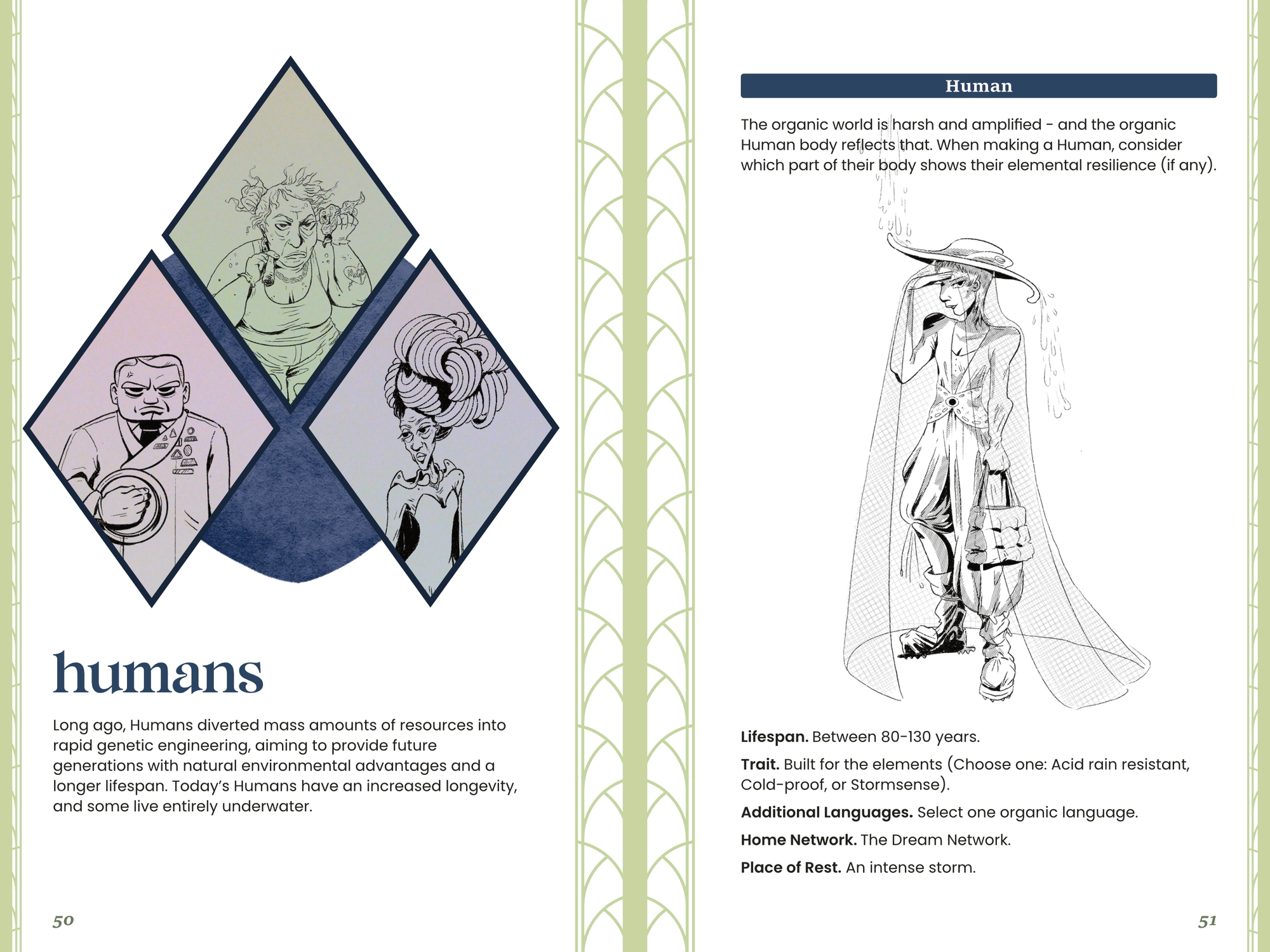
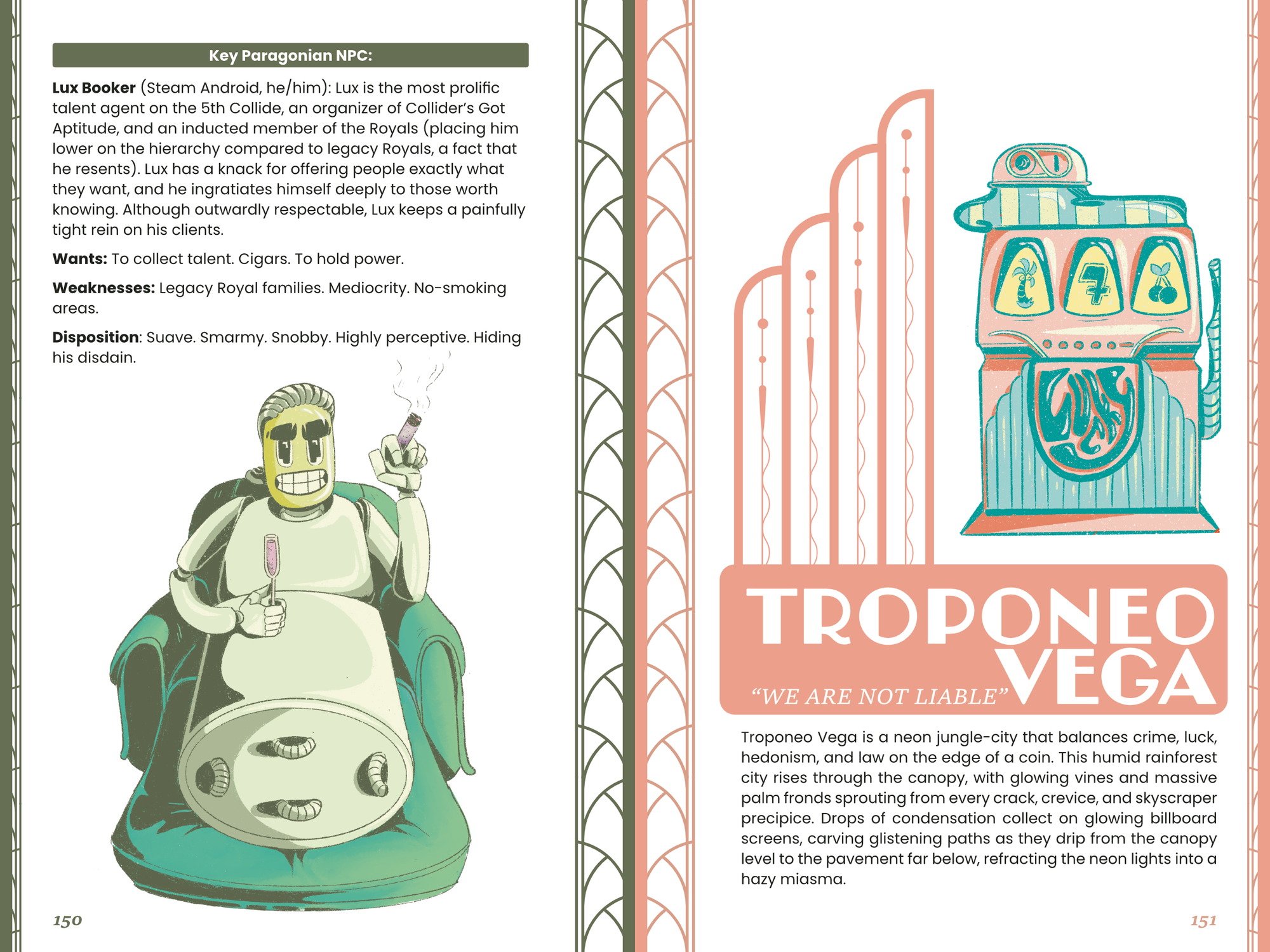
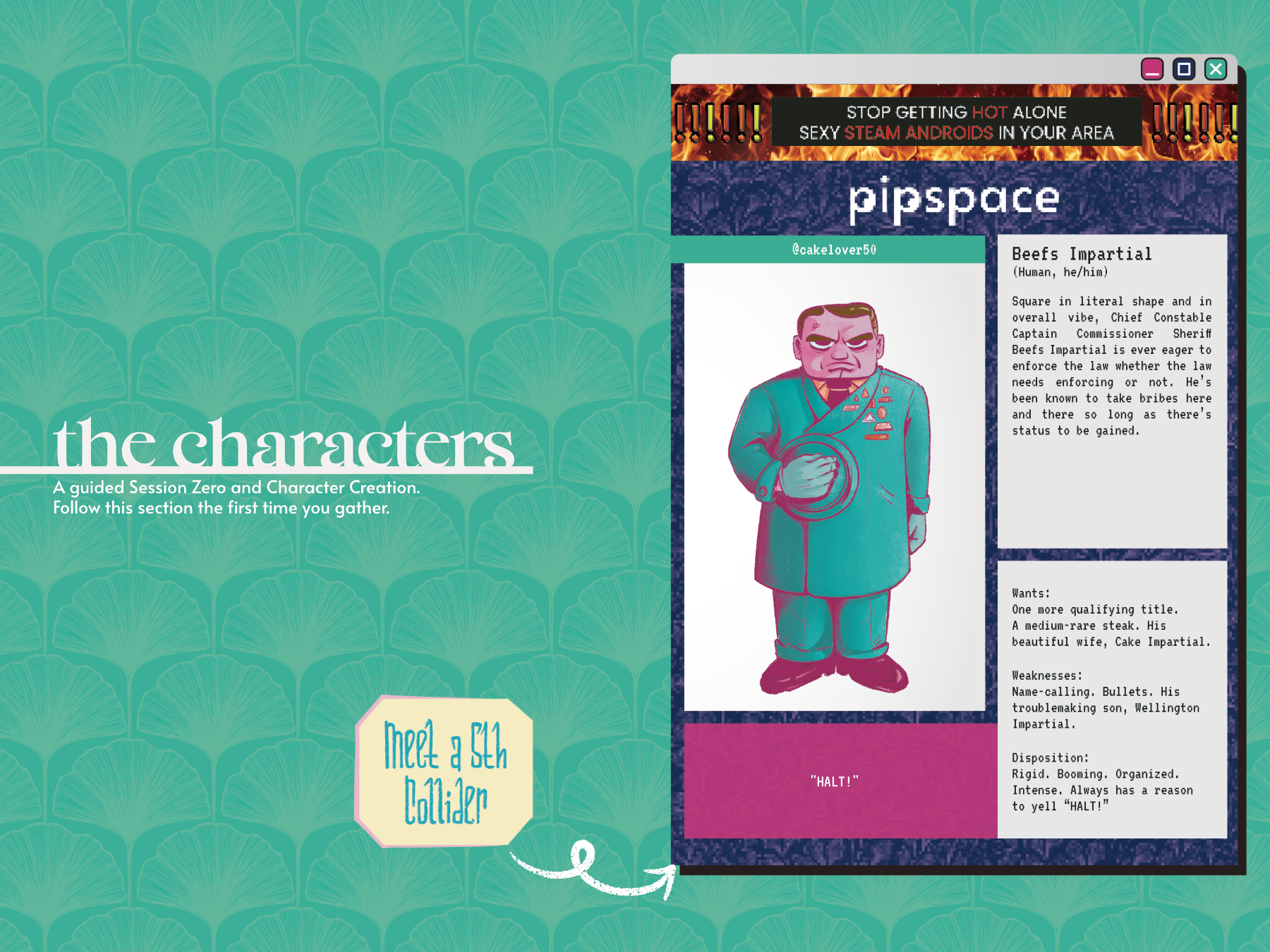
Gods die all the time in tabletop RPGs. Sometimes their death kicks off an adventure; other times characters are killing them — no biggie. But in A Fool’s Errand, players choose either to bury or create a new deity, known as a Major Arcana, as a result of a cataclysmic event known as the Big Oops. The consequences of this cosmological power shift, which will reverberate across an entire campaign, will arise from a petty squabble, whethe the result of a godly alliance gone south or a public spat that materialized a new Major Arcana from the pandemonium. As a Fool wandering a world filled with humans, androids and composites of both, players will also traverse both dreamscapes and digital realms beyond the physical.
A Fool’s Errand was conceived out of an Actual Play called Planet Arcana, with designers J Strautman and B Marsollier running a different RPG for players Peter Oldfield, Shaun Marsollier, and Skye Wallace at the time. It’s why there’s so much depth to the game’s universe: much of its science fantasy markers — modded humans, neon-drenched cyberpunk cities, and world-rending calamities — were originally expanded upon in the podcast’s 100 episodes. Playtests for what would become A Fool’s Errand were seamlessly woven into the series by Strautman and Marsollier. Central to the RPG’s experience are tarot cards, with the Major and Minor Arcana subtly influencing every player’s motivations and abilities. “Much of the show hinged around intensive worldbuilding and tarot,” the creators told Rascal in an email. “Eventually, no system felt like it could adequately represent the ideas we were exploring and the tone we wanted.”
Tarot cards were, after all, first created for card games rather than for divination. But part of why the tarot deck appealed to Strautman and Marsollier as a gameplay tool came down to the named cards — archetypes that they said “represent core aspects of the human (or android) experience”. Major Arcana like the Hanged Man, the Tower, and the Devil can present key milestones in our lives and be interpreted in personal ways, with this intimacy propeling the game’s storytelling elements. “On a personal level, the use of tarot has been a central part of our decades-long friendship, with many childhood sleepovers spent using tarot for diversion, self-examination, and storytelling,” the designers added.
“I think tarot lends itself really well to GMless andsolo games, and A Fool’s Errand is a GMed campaign game,” they said. “Also, A Fool’s Errand asks all players and the GM to use their own tarot deck. Players customize their decks to suit their characters, and there’s some unique card-counting moments that can be exciting for people who are into a bit of crunch. In designing the game, we ‘used the whole animal’, so to speak.”
Typical for this style of RPG are in-depth discussions around identity and consciousness, which makes sense that the sci-fi movie (and proceeding anime film) Metropolis was the biggest influence behind the game. Cowboy Bebop, too, guided A Fool’s Errand’s intricate balance of drama and humor, as well as its portrayal of a future that’s grounded in nostalgia and genre film cues. “Final Fantasy 7 was foundational to both of us, especially its setting design and themes of revolution and global catastrophe,” said the designer duo.
Just as A Fool’s Errand makes plain the schemes and machinations of its powerful deities, we ask Strautman and Marsollier to break down the intricacies of the game to its barest elements through our regimen of Rascal 7 questions:
Responses have been edited slightly for clarity.
- If your game had walk-on music or a climactic needle drop, what song would it be?
- If your game grew like a plant, what was the seed of the whole thing? And what about you made you the right kind of soil to receive and nurture that idea?
The seed is a friendship that began almost twenty years ago and two people who grew up together consuming the same media.The soil was the decision to start an actual play together, which both of us consider a crowning achievement for myriad reasons. Starting Planet Arcana allowed us to create a world together like all the ones we had seen when we were young; it allowed us to grow a working relationship that broke ground to bigger endeavours, and it introduced us to the gaming scene, which showed us all sorts of beautiful, weird games.
- If your game was food, what would it be?
An unlikely combination of flavors to represent tonal whiplash from comedy to drama, from personal to global. Like having a gas station hot dog for dinner and pairing it with a 16-year-old Lagavulin.
- If your game was a machine and we could break it down into parts, which is the smallest part that you think best captures the essence of what you're trying to do?
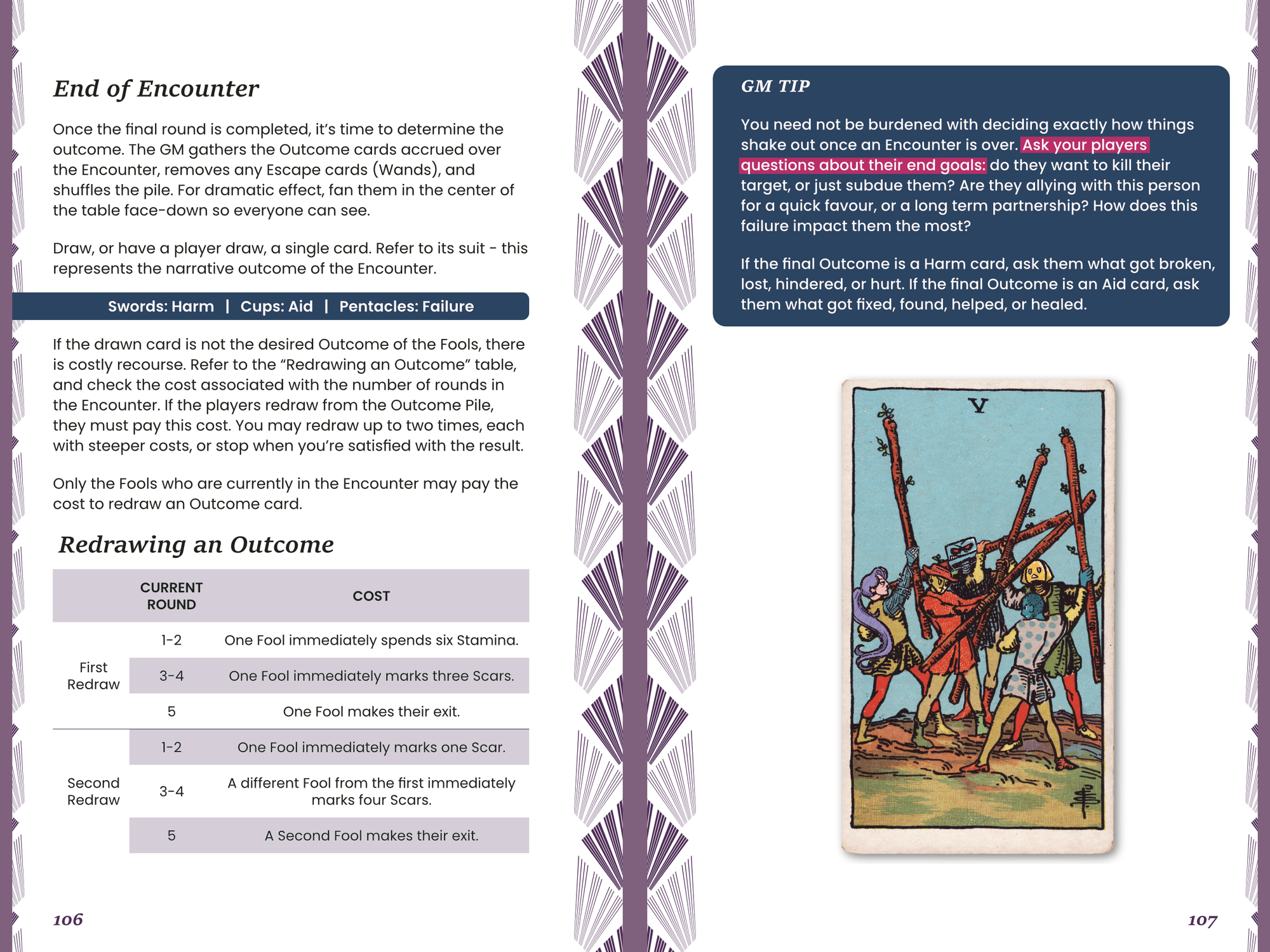
In an encounter, every time a player succeeds, they choose whether to add a Harm or an Aid card to an outcome pile. The encounter resolves with the GM drawing a card from the outcome pile (typically a mix of Harm, Aid, Failure, and sometimes Escape cards). It’s a small choice that the players must make mid-encounter that ultimately doesn’t become important until much later than the point of decision. Even when it’s not clear where the encounter is going, players commit to stacking the deck to fight for their agency. This agency can often be opposed to the rest of the party’s goals but then must be examined and resolved together.
- If we broke your game down into parts, what's the thing we wouldn't see? What do you think only emerges out of the entire thing moving together?
Tarot is all about interpretation, and we used that in every aspect of the game, far beyond reading the text on the cards. There is a fascinating side effect of this game where players arrive with their own versions of concepts that feel universal — like the Lovers, Death, Judgment — and ascribe them to situations in ways that are impossible to predict.
This interpretation also applies to A Fool Errand’s skills and abilities. The skill list is basic on the surface, but we have seen dozens of different applications for a “Navigate” check, from wayfinding to conversation-leading to following your own desires. A favorite ability of ours is “Manifest a Party. Birthday? Baby shower? Divorce? Create any celebration on the drop of a dime.” This ability has never been applied or interpreted the same way more than once, and we’ve seen it so many times.
- If your game had to commit a crime, what crime would it be?
A Fool's Errand would commit an emotionally-driven assassination; an intimate personal crime that changes the world. The kind of crime you spend months discussing and over-intellectualizing with your conspirators, endlessly debating the ethics and philosophy of what you're about to do. A crime so complex that it can go wrong in a million different fun and horrific ways.
- If your game was to win an Oscar, who would it thank in its acceptance speech?
First and foremost — thanks to the players in Planet Arcana: Peter, Shaun, and Skye, who joined us in our collective journey and spent hundreds of hours laughing, crying, and creating the world.Thanks to all the (many, MANY) playtesters who saw the game develop over multiple years and tested various versions. Finally, thanks to all the Fools who picked up the game and completed the errand it sent them on.