We are unprepared to contend with AI in tabletop
The future cannot be built out of witch hunts and CEO "generosity."

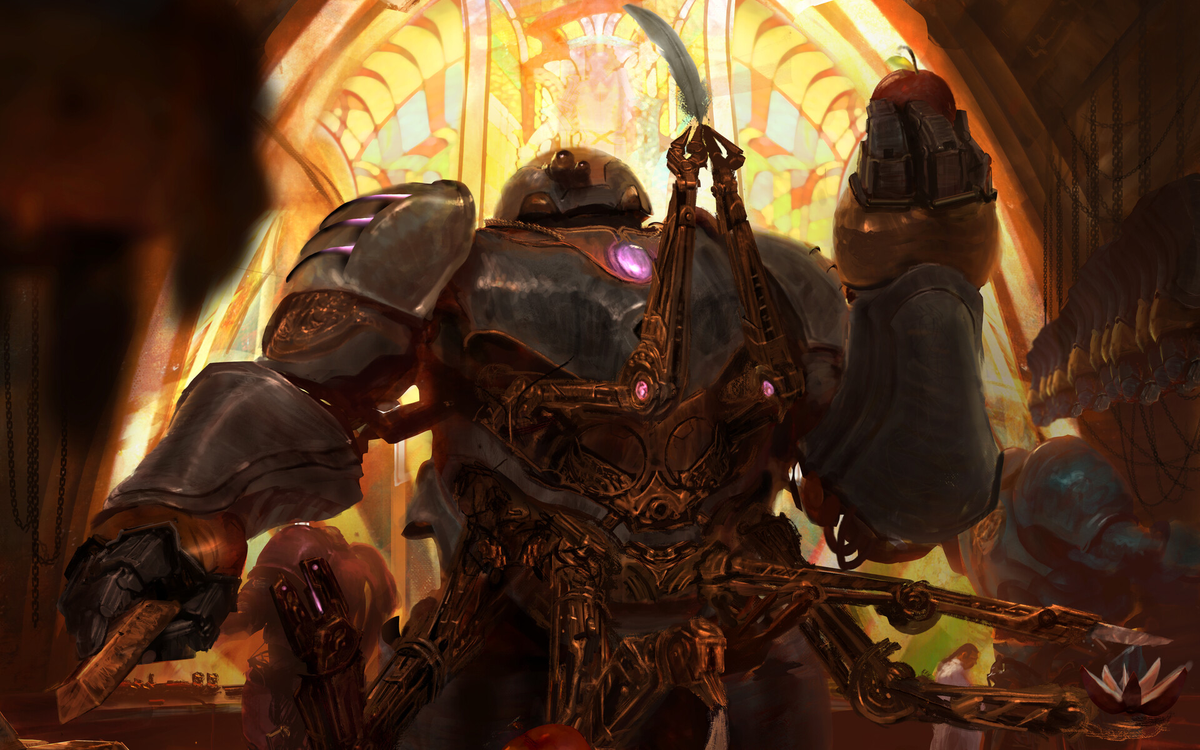
After an individual in the Pathfinder 2e subreddit alleged the use of generative AI in the upcoming Feybound sourcebook, a familiar engine kicked into motion. Commenters on the November 10 post picked apart every detail of the included screenshots. Moderators locked and then unlocked the thread. Battle lines were drawn between confident laypeople and eternal skeptics. Two days later, a Paizo staff member explained on the publisher’s forum that artifacts and discrepancy on the image was due to “squishing the layers together in layout.” Some accepted this; many more didn’t. When approached by Wargamer, ENWorld, and Rascal, Paizo denied any use of generative AI in the commission and stood in solidarity with the artist.
“Paizo does not use AI art in our products and all artists sign a contract with a clear exclusion of using artificial intelligence in their creations,” a representative said via email. “We have discussed the concerns raised with the artist responsible for the art in Feybound and the artist denies using AI. The art director supports the artist, who has produced a lot of material for Paizo over the years. Paizo takes alleged uses of AI in our products seriously.”
That might have been the end of the matter in a world where generative AI hadn’t corrupted both the internet’s fundament and our trust in online information. Paizo outlined its anti-AI policy in a 2023 blogpost and has ostensibly held that line, stating that “so long as the ethical and legal circumstances surrounding these programs remains [sic] murky and undefined, we are unwilling to associate our brands with the technology in any way.” The policy did not stop speculation that the artist had tricked Paizo, or that the art director was either inept or lazy. Seeing horses squashed together and chairs missing legs, commenters assumed nothing but generative AI hallucination.
 Paizo and Artificial Intelligence
Three graphic designers who spoke to Rascal on background said the verdict wasn’t so simple. Most of the portions painted as definitive evidence of gen-AI use could be explained by a combination of software weirdness and simple human error — dramatically expanding the image’s dots per inch (DPI, a common resolution measurement), composite artifacting, and even the “sandwich theory” of flattening layers could account for some (but not all) of the aberrant details. Convenient smoking guns fell apart when brandished against Hanlon’s Razor. The designers claimed a rush job or carelessness were just as likely culprits, as was the potential of Adobe Photoshop’s neural filters and generative fills — features shoved into every crack of digital tools that are increasingly “powered” by machine learning and generative AI, whether we like it or not.
Paizo’s art director told Rascal via email that the company has previously “caught artists using AI and responded appropriately” and that it will “remain vigilant and will continue to refine our analysis moving forward.” The art director firmly reiterated that they believe the piece in question was not created using generative AI. But what good is belief in a world of unfettered skepticism, where plausible guilt and deniability are seemingly ever present? Indie darling video game Big Walk was recently the epicenter of one such ethical mire when developer House House disclosed the 11th hour use of generative AI to fix bugs. This admission followed a hardline stance from IGF judges regarding their opposition of any form of generative AI used in potential awards recipients, which kicked off broader discussions (and arguments) about how firm everyone should draw lines in the proverbial sand. No consensus was reached, but it did produce some enlightening blogs.
I’m ambivalent about policing generative AI use on a case-by-case basis; such a phenomenological approach produces more witch hunts than justice, especially when evidence can be so hard to verify. However, this only captures part of the problem with AI technology in the tabletop hobby. On November 16, enterprise software Optimizely suffered a brief malware attack that potentially compromised hundreds of websites that use its service platform — D&D Beyond and the MTG Secret Lair site were among them, according to security researcher Scott Helme. Optimizely deploys generative AI via digital agents and a data interaction layer, and the attack was reportedly in search of crypto wallets and related financial data.
 Luke Plunkett

D&D Beyond’s executive producer Brian Perry commented on the D&D subreddit, saying that no payments or user information had been exposed and that the team had “acted quickly” to remove Optimizely’s service from the website. While this was certainly a relief to D&D Beyond users, it was also the latest in a growing volume of attacks, collapses, and widescale infrastructural failure stretching from Microsoft and Apple to online banking, city court systems, and the entire US national air traffic control system.
Two strains of responses emerged online: one blaming tech companies who have laid off hundreds of thousands of engineers in favor of vibe-coding skeleton crews; and the other pointing at decades of “tech debt” plaguing the modern internet (see: any edited versions of this classic XKCD comic). The truth likely borrows six of the former and a half-dozen of the latter. More importantly, it represents a threat larger than both the tabletop hobby and the industries that produce analog games. Publishers such as Hasbro and Paizo, vital platforms like Kickstarter, and individual customers alike are forced to operate within a fragile, fracturing internet while generative AI batters it with a sledgehammer (all while some aforementioned companies embrace AI with open arms).
The malignant spread of generative AI is too big to be defeated by individual action alone. But the public animus must be vented somewhere. This is why every allegation against an artist carries the feeling of a public pillory, and why every fatalistic adoption feels like a lost battlefront. What else are we to do against a technology called inevitable by its creators and largest investors? The IGF letter stands out as a version of collective moral action that might lend some steel to opponents’ backbones. Paizo’s anti-AI stance would be stronger within a coalition of publishers — dozens banded together to fight the Trump administration’s tariff policies, but where is that sense of urgency, now?
 Jason Koebler
As the title of this piece submits, the tabletop hobby is ill prepared to resist — and ultimately repel — generative AI. Paying customers’ ire is diffuse. Companies adopt piecemeal policies and safeguard their own reputations. Large trade organizations such as GAMA turn with glacial speed, still reeling from the last economic heart attack (and still desperately filling top leadership positions). When victories against tech oligarchs’ unchecked greed happen, it is often thanks to determined artists wielding their platform. Wizards of the Coast said on November 20 it plans to give the company’s portion of a $1.5 billion class action lawsuit settlement with the authors whose work were stolen by Anthropic and used to train its LLMs (thanks, Wargamer).
Before you believe this was a pure stroke of generosity, author James Lowder wrote on Facebook that conversations with WotC leadership had been ongoing for months between writers and authors who he claimed had “more clout” than himself. "This all came about because some of the writers used what influence they possess to raise the issue and because the people inside Wizards, up to the highest levels, were willing to consider the situation from more than a financial perspective,” he said. “I don't think this would have happened without those author-prompted discussions, especially the efforts of R.A. Salvatore," Lowder continued. "Huge credit to the folks at Wizards, in particular Dan Ayoub, who were open to the discussions and then did the generous (and right) thing here. And it was the right thing to do."
Relying on the moral compass of “good CEOs” isn’t an effective or reliable tool for reparation. Nor will tabletop executives hold the Sam Altmans and Peter Thiels of the world accountable. But instead of despairing, we should demand a better reality from anyone near a lever of power. And if they won’t budge, tabletop should harness some collective refusal instead of either burying our heads in the sand or demanding each others’ heads on pikes.

IWGB Game Workers Union co-founder Austin Kelmore wrote on November 13 about using our pooled outrage and dismay to build an anti-AI movement instead of running individual offenders out on the metaphorical rail and hucking tomatoes at anyone’s moral stand. His proposition is not that a collective campaign will be easier — it will take monumental effort from individuals and companies — but that its goals are generative, progressive, and maybe even noble. Critically, the piece also clarifies the difference between targets and constituents.
"Something I would love to see people do is build a campaign against AI in the games industry. Come up with clear demands and actions people could take, then organize together to bring in more constituents into the campaign. A campaign like that would make it much easier for people to take action in the future and understand how their actions build into a wider movement," Kelmore wrote.
I do not know the correct answer to generative AI infiltrating tabletop. A feature (bug?) of journalism is that we prioritize spotlighting problems over offering solutions — that’s the job of elected officials. But this much is true: we are only individuals until we decide to be something more. We are only powerless until we realize that was never actually true.