What does it mean to own part of a game?
Products Of Your Imagination™, owned by everyone.


In mid-September, Lap-Sun Chan wrote to the courts to drop the lawsuit he brought to Wizards of the Coast/Dungeons & Dragons, concluding a three-and-a-half month legal scuffle between a relatively unknown game designer from Flushing, New York and the multi-million dollar tabletop game publisher. In June, Chan originally filed a complaint against Wizards, accusing them of stealing an idea from a piece of his game design published in 2016, which he had also turned into a short film in 2022. He was demanding $10 million.
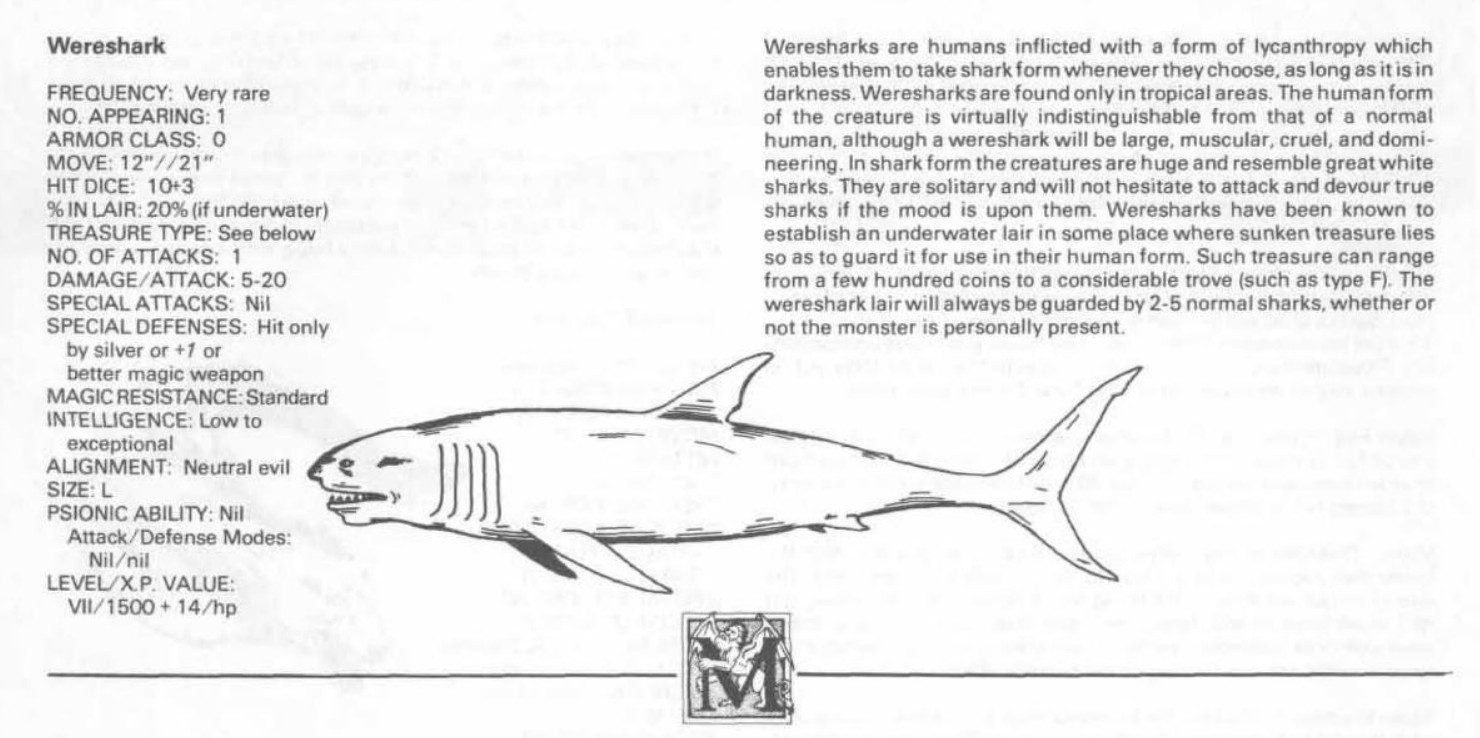
The idea in question? A wereshark. Chan alleged that, as he invented the idea of the wereshark in 2016, and because D&D published a “pirate manual” in 2022 that included a wereshark (along with some specific details regarding electric/magnetic sensitivity and enhanced skin) he was owed compensation for the theft of his idea. The problems appear before you even have time to write them down: the idea of a wereshark has existed in fiction since well before 2016, and TSR first officially published a version of the monster for Dungeons & Dragons in the 1983 Monster Manual II (thank you William Ansell for doing this legwork). Additionally, Wizards of the Coast didn’t publish the pirate manual in question — it was published by Jason Nelson of Legendary Games. If it wasn’t absolutely clear, Chan was representing himself.
I don’t want to spend too much time lambasting Chan, as the well-paid lawyers from Wizards of the Coast have already done so across hundreds of pages of evidence that assert and defend a position contrary to his. I think that Chan, for all his creative and legal efforts, has exposed himself in a way far more vulnerable than attempting to convince a court that he owns the idea of a wereshark — the document he submitted showed that he really didn’t have anyone to talk to. He stated multiple times that he was in ill health, and often talked aloud to himself — he even alleged that he believes someone associated with WotC might have overheard him talking to himself (perhaps walking by his home) and stole his idea afterwards. Within his documents, he doesn’t mention playtesting, or game design groups, or even other players with whom he might have communicated or played with. He is, within the strictures of this lawsuit, a lone gamer, holding his work, and asking for someone — anyone — to recognize its value.
I can’t fault Chan for this. Games — and all forms of art — are ever-expansive things, encompassing work done alone, done in community, done in collaboration, and done in context. But ultimately, tabletop games are designed to be experiences, and no game is complete until it is played. Most games are not meant to be isolating, individualistic expressions of art. Every game empowers a dialogue, even if it only occurs between the designer and the player. So what’s left when a player is removed from the dialogue of game design and play? When a game remains incomplete, unowned, unplayed? What happens when someone is just talking to themselves?
Owning a part of D&D is, in some way, the goal of every person who plays it (or, to be clear, the goal of anyone who’s played any tabletop game of any kind). Every character, every decision, every worldbuilding choice: these are all the things that you, very technically, could legally own. Intellectual property law in the US heavily favors creators, and allows for inspiration to be drawn from ideas as long as it is not copied wholesale or infringes on specifically trademarked material. It is difficult to prove plagiarism in a court of law, and typically considered more trouble than its worth to legally pursue media that clearly draws inspiration from another piece of intellectual property.
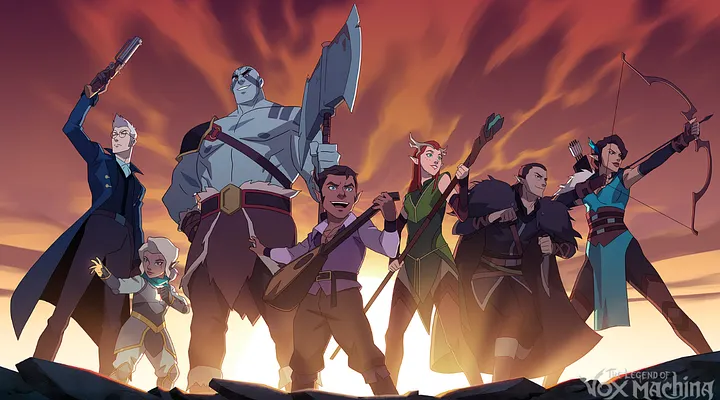
So even though D&D owns tieflings, you can still write about horned creatures with some kind of inhuman ancestry, their adventures, the actions, even the gear they have and sell that story for a profit. D&D owns the game (but not the game mechanics), not the stories you tell and not the ideas that you have. But more than that, when you play a game with your friends, the experience that you have is an intangible, intractable experience that nobody can take away from you. It’s not something that can be bought or sold or litigated in court; it’s yours. You own what you did. There is a difference, only rarely distinguished, between experiential ownership — where something happened to you, or you created something in your life — and legal ownership — where ownership implies an asset that you hold in your possession. The value of the game is in its playing; the value of design is in how well it facilitates that experience.
When we play games, we give gifts freely to each other. Our time, energy, imagination. The ideas we share are secondary to the work that we are doing to exist in a collaborative storytelling existence with each other. We both own what we are doing, and we have ceded that ownership to others, asking players, readers, even the audience, to take this, please; Take my ideas, and my character, and my actions, and my rolls, and my words, and tell me this work, this love, this gift worth something. Tell me it’s worth something to you. Tell me I’m worth something.
Who can fault Chan for wanting this validation? It’s easy to read these court documents and dismiss the lawsuit as an absurdly frivolous waste of Akiva M. Cohen’s time as counsel to Wizards of the Coast, but I recognize myself in Chan’s efforts, despite how… indefensible his position might be. I, too, want to own D&D. I want to own every single game I’ve ever played. I want to own it the same way I own every single experience that brings me relentless joy, or heartbreak, or makes me feel like a wretched little gremlin, sighing as I parse through rules and see tragedy written on every page. I want to own D&D and, in my own way, maybe I do.
So, maybe Chan can own weresharks. As a treat.