Radio Hour: Entering a Horse Race on a Donkey, feat. Jenna Stoeber and Tomas Franzese
All the president's hype men.

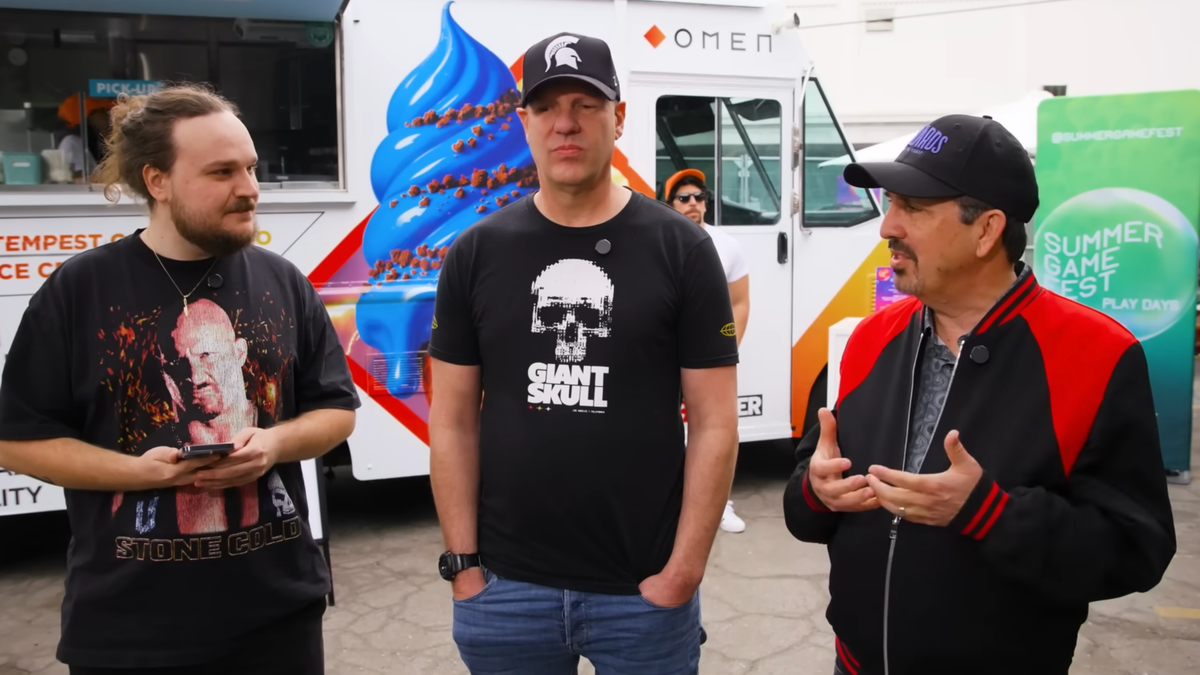
Episode 37 of Rascal Radio Hour* welcomes two certified video game experts, Jenna Stoeber and Tomas Franzese, in order to discuss a pair of issues crossing over from the digital entertainment industry to our analog one.
First up is United Wizards of the Coast-CWA and the Magic: The Gathering Arena workers who want their publisher bosses to stop engaging in a bunch of alleged union-avoidant behavior (after recording this podcast, two union members told me about a very silly debate that was all but a captive audience meeting).
Later, the trio dive into the cancelled Dungeons & Dragons video game that was being developed by Giant Skull and had been heavily hyped by WotC president John Hight. Without an announced AAA pillar to Hasbro's digital plans, the pressure on Exodus and Warlock increases. Which, well... hm. Check back later for more information on how that turns out.
Of course, Chase leads his two guests deep into the Question Dungeon to do battle against the definition of a "parody game", as well as the perception that the tabletop industry is simultaneously tiny and Balkanized.
You can find Rascal Radio Hour on Apple, Spotify (for now), and all the other various podcatchers. Leaving a five-star review helps new listeners find our show and website. Since we eschew traditional advertising, these reviews and any word-of-mouth are genuinely a massive help — thank you!
*Chase failed to count numbers for a critical moment and called this "episode 36". Oops!
Here's an excerpt:
Chase: United Wizards of the Coast announced they were unionizing with a few big asks. Among those were protections against AI, but also some tangible material stuff, such as an end to the current return to office mandate, which is becoming very popular in corporate settings these days. Hasbro really wants folks to come back to the office. But the Arena team said so many of the workers who are there now were hired under a work-from-home setup, and they live in any other city that isn't Seattle or the Renton, Washington area where Wizards of the Coast operates. Now Wizards is asking them to uproot their lives and their family to come to live in one of the highest cost of living cities in America.
Jenna: Yeah, with the fewest apartments available.
Chase: It's not an appealing ask, I gotta say. It feels like real golden handcuff territory. What are you gonna do, not work for Hasbro and Wizards of the Coast?Instead of voluntary recognition, Wizards of the Coast (and this comes from Rebekah Valentine over at Kotaku — thanks Rebekah) instead sent letters to their homes that were signed by Wizards of the Coast president John Hight telling workers about all the evils that unions will bring in, about how like they're gonna get in the way of this direct relationship between the workers and management. They're gonna cost them money, you're not gonna get as many benefits as you did. You might even lose benefits! I think people will remember two years ago whenever Wizards sent Pinkertons to a YouTuber's home to seize unreleasedcards that had been accidentally sold to him.
Tomas: I had forgotten about that.
Jenna: I didn't hear about that! The Pinkerton still exist?
Chase: Jenna, your reaction was the same as many people: Why is the first time I'm hearing the Pinkerton still exists is when they went to a YouTuber's home to seize Magic: the Gathering cards? What the hell's going on?
Tomas: I remember there were a lot of Red Dead Redemption jokes around the time that was happening. It was crazy. It reminds me the most of Activision Blizzard before the the Microsoft acquisition fought back similarly where employees at Raven Software, who made Call of Duty: Warzone, attempted to unionize, and [Activision Blizzard] were working with McKinsey and other companies to try to union bust. I'm from the perspective that all unions are good. People have problems with ones that have existed for a hundred years, so then they try to use that as justification for why new ones shouldn't exist. If the tabletop market starts to implode (like the video game industry is right now), they have those protections guaranteed. I feel like video games are maybe a few years ahead in terms of unionization, but it's still not completely ubiquitous. Compared to industries like film, it's far behind in terms of the scale and structure of their unions.
Jenna: And it's worth noting that this is classic, playbook stuff from Hasbro. If a company gets wind that people are trying to unionize, they will immediately call a bunch of people whose job it is exclusively to bully and intimidate about the dangers of unions. And it absolutely does work. We don't hear about the unions that don't make it. These tactics do work on a lot of people.
Listener, if you're out there and you're unionizing or you're thinking of unionizing, here's my professional tip on how to do that from somebody who was on the union board for a while: You don't want management to learn that you are trying to unionize until you shore up your numbers. You wanna make sure you've got that majority line of people who are committed because you're always gonna have some people who are on the fringes and are nervous for whom these tactics works. But the more people that you can get in and on your side before management learns and starts to deploy this, again, very classic playbook of a lot of billowing smoke, the better. Having been through the unionization process, it is simply true that if you have the numbers on your side, there's not a lot they can do.
Tomas: Unionization is great. Everyone should do it if they can.
Jenna: Yeah, you should do it.