First ever Jubenshacon scripts a murderously successful and sold out debut
Another milestone in the story of the Chinese genre's international crossover.

Captain Black has been found dead aboard a spacecraft bound for Earth with four brightly coloured crewmates — Red, Blue, Yellow, and Green — accused of the grisly murder. What has taken place on the ship? Is there an imposter among the crew? Who’s most likely to be voted as the murder suspect?
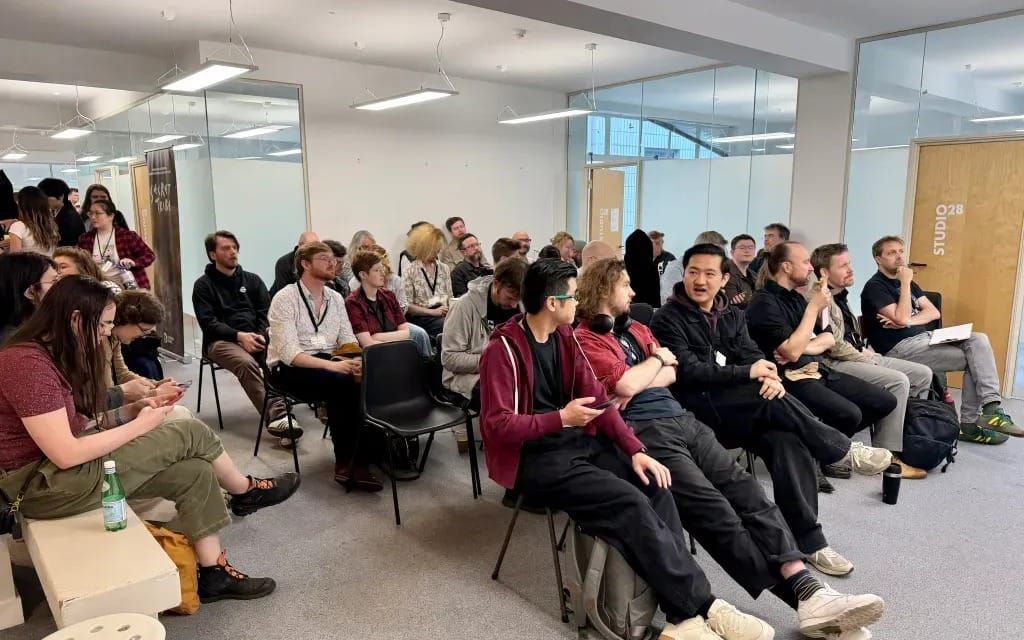
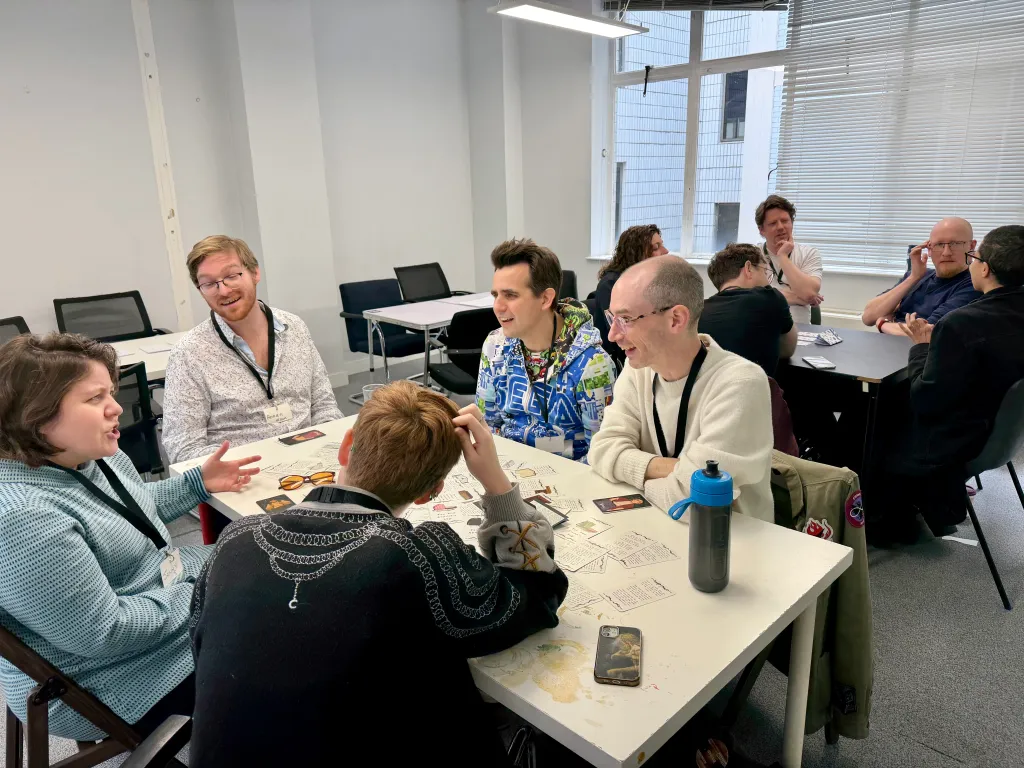
Rather than a superficial remake of the online game Among Us, this is designer Ophelia Au’s sci-fi murder mystery jubensha called Worms Against Humanity. It’s one of several games attendees played at Jubenshacon, the first English-language convention centered on jubensha, which took place over the weekend of May 8 and 9, 2026 at the Theatre Deli in London, UK. The game’s brief playtime of around 1.5 hours, as well as the familiarity and simplicity of its design, was an approachable choice for most attendees to the convention, many of whom were new to jubensha, as well as time-strapped participants who didn’t want to devote too many hours to one session. “Based on the reactions that reached me, people enjoyed how it was such an easy game to get into,” said Au in an email to Rascal. “It's a jubensha geared for beginners in many ways, from the straightforward introduction to core jubensha mechanics (clue cards, character scripts, timeline reconstruction, hidden identities, etc), to the immediately recognizable theme (Among Us-inspired, with classic sci-fi tropes).“
The demographics were perhaps unsurprising, given the novelty of the genre to most players outside of China. Hon told Rascal that 80% of Jubenshacon’s attendees had never played jubensha before, which meant teaching and imparting the intricacies of the script murder games to the attendees became a significant challenge. “Imagine a tabletop RPG convention where almost everyone has never played one before, and never even seen one played in an actual play. The vast majority of attendees loved the experience, but inevitably there were a couple who were a bit confused,” he said. For instance, several players had revealed more information than required about their characters, believing jubensha took on a collaborative nature similar to tabletop RPGs.
As the game designer behind alternative reality game Perplex City and the mobile game and fitness app Zombies, Run!, Hon is fascinated by the intersection of games, interactive art, and immersive experiences — with jubensha lying right at the intersection of these interests. “I'm pretty sure I first heard about jubensha via the Chaoyang Trap House newsletter in 2022,” he said. “My parents are from Hong Kong, and I can understand Cantonese a bit. But I'm definitely not fluent, so like most English speakers I didn't have any opportunity to play or even learn that much about jubensha until fairly recently.”
Thus, the initial idea of Jubenshacon came about when Hon was running a panel on LARP at the Immersive Experience Network summit in October 2025. He noticed there were several jubensha designers in attendance: t&c from Suspense Studio, a Singapore studio that creates original English-language jubensha; Joe Strickland from Chronic Insanity, a Nottingham immersive and interactive theatre company; and the award-winning designer Arlo Howard, who combines play and theatricality in their works. Hon decided to pitch the idea of a jubensha convention to them, with David Middleton, the founder of escape room venue Bewilder Box and games studio Rebel Brain, joining as a co-organizer eventually.
“Jubensha is definitely in its early stage as an English-language form, so we had a few different motivations for organizing the convention,” said Hon. “The first was to showcase jubensha to the public. There's a ton of interest but very few opportunities to play GMed games outside of more expensive conventions and festivals; if you're interested primarily in jubensha and not tabletop RPGs or board games, you aren't going to travel to UKGE or similar just to play a couple of games.” At the same time, he wanted to bring together a community of designers from adjacent scenes such as escape rooms, LARPs, and tabletop RPGs, and nurture an interest in jubensha as a related, burgeoning genre. After announcing the convention on his blog and social media, he was confident the event could host a full day of games and talks based just on the responses garnered. “We sold about 140 tickets, and I am sure we could've doubled that, but we simply ran out of space and available games!” he said. Given the nascent genre of English language jubensha, the lack of available games isn’t unexpected; there were just ten games, across five studios being played at Jubenshacon. Several jubensha sessions were organized across as many rooms:
- Incog Games: Spy of the Year
- Chronic Insanity: All Falls Down: Sorroborough, Seven Strikes, Cognito, Here, You Scream: New Delphi
- Suspense Studio: Game Over, The Sandcastle
- Twist ‘n Turn Studios: Worms Against Humanity
- Jubensha Adventures: Fade to Black, Bear-faced Liars
At the same time, talks by creators that included Celia Pearce, Arlo Howard, and Ophelia Au also took place. In particular, Hon wanted to invite Chinese designers such as Joanna Lyu and Yihan (Clytze) Li to speak at the event, who offered their perspective on the popularity of jubensha and crafting these games in China. “Jubensha grew popular in China,” wrote Hon on his blog. “It would’ve been unacceptable if we didn’t have anyone who’d worked or studied there, so I prioritized experts familiar with the Chinese scene.”
“We sold about 140 tickets, and I am sure we could've doubled that, but we simply ran out of space and available games!”
When I asked about the reception to her talk, which focused on adapting jubensha to a Western audience, Au shared she was surprised by how well-attended her session was—especially as she conducted it remotely. “It really made me wish I could have been there to get to know the con-goers more!” she said. “From what I could tell, many of them seemed to be those who had an interest in jubensha from an industry standpoint, which is exciting because that's how we get true progress in moving jubensha forward outside of China.” She felt that the attendees had posed thoughtful questions, such as the distinction of jubensha puzzles as compared to games of other genres. “What came to mind were the puzzles that play on the unique strength of jubensha that not many other media can replicate — the use of multiple perspectives,” she added. “Every character has their own point of view and assumptions, and these beliefs can and do change over the course of a well-written jubensha.”
There is, however, one particular bugbear around organizing a jubensha-centric convention, no matter where it’s held: ensuring that players avoid spoilers about games. Whereas multiple tabletop games can take place in the same room of a convention, Jubenshacon’s sessions were necessarily spread out given that such games are heavily plot- and puzzle-driven. “The problem is that it's really hard to find venues with large numbers of small rooms. Most jubesha have around five to eight players, so [this is a problem] we didn't really solve,” Hon said. On his blog, he elaborated on other unique concerns that arose over the weekend, such as how to dampen noise in larger rooms for future conventions.
“It would’ve been unacceptable if we didn’t have anyone who’d worked or studied there, so I prioritized experts familiar with the Chinese scene.”
Hon wanted to keep Jubenshacon accessible, which meant calibrating ticket prices between affordability and funding an event worth attending. To this end, Jubenshacon’s tickets were sold for £15, which he said made it that much more affordable for people living both within and beyond London. “I think we really succeeded in that, even if I know some people would have preferred a pricier and fancier and more exclusive event,” he said. “But there's plenty of room for a whole variety of conventions and festivals about jubensha, and there's a lot we learned from this one.”
Jubenshacon sold 140 tickets, which situates it in a completely different bracket to conventions like UK Games Expo, which saw at least 51,000 attendees this year. That's because jubensha is still a relatively niche hobby set within the tabletop games industry. Rather than reaching for similarly high number of attendees as international conventions like UK Games Expo and Gen Con, Jubenshacon instead focused on the experiential, with organizers wanting to ensure that its exhibitors and speakers can attend the event, sell their own tickets for games, and foster sustainable growth for subsequent jubensha-centered events. While Hon shared that Jubenshacon operated at a loss, it was one that he said he “was happy to subsidise”. Many in-person events such as Dragonmeet, Breakout Con and Gamehole Con similarly focus on attendance growth over profitability, viewing gradual, single-digit gains as the sustainable path.

That’s why Hon is largely pleased with the outcome of Jubenshacon 2026, even if there were several takeaways he will bring to next year’s event — for instance, better sound-proofing, and optional induction sessions to help players learn how to play. Finally, a better ticketing system and standby queue would also help; Hon mentioned that some attendees ended up purchasing game tickets but not convention tickets, which slowed down check-ins. On the other hand, he was pleased to learn that 90% of attendees were planning to play more jubensha after the convention, with some vendors selling out of their stock during the event. “I was [also] really pleased with the talks,” he said. “All the speakers were fantastic, and I'm happy we had several people who were very experienced in Chinese-language jubensha, including some who'd flown over for the convention. The audience's minds were truly blown by how quickly jubensha has evolved in China.”
Perhaps most gratifying for Hon were the newly-forged connections between initial strangers that made the convention a success. “The social scene was great,” he said. “One of the nice things about jubensha is that it provides an opportunity for strangers to play with and against one another, and I saw a ton of people chatting and making friends after the games.”