Tabletop Bookshelf built its brick-and-mortar future out of past goodwill
For owner Tom Gibes, Milwaukee's first independent RPG bookstore is a testament to lifting up small, passionate tabletop creators.

Just before noon on a cold, clear Saturday in the Walker’s Point neighborhood of Milwaukee, families eating their ice cream cones from Purple Door, or couples meandering after brunch, looked on with curiosity as they passed a line of people stretching down the two-block length of W. Pennsylvania Ave; fathers in nerdy t-shirts trying to keep their children occupied, older women with silver hair, clean-cut guys in Green Bay Packers gear, and talkative groups of alt-goth, college-aged kids — all were reflected in a long line of windows that composed the unassuming storefront in a large industrial building. Normally for Milwaukee, such a crowd might suggest a restaurant opening or a limited edition beer from a local brewery, but this Saturday people gathered for the opening of the city’s newest (and only) independent tabletop RPG bookstore, Tabletop Bookshelf.
After the nearby clock tower struck twelve, owner Tom Gibes stepped out onto the sidewalk with a pair of oversized scissors. He gave a small speech, and a cheer quietly rippled down through the line when he cut through the ribbon. People then started wandering inside to experience the store’s first official day.
Southeast Wisconsin has a special place in the history of the RPG hobby, and while Gen Con formally left Milwaukee in 2003, a strong tabletop gaming community has remained. It is an environment that Gibes himself grew up in, and the same community that he is looking to serve by bringing his bookstore to a physical location. Tabletop Bookshelf joins a handful of other stores around the greater Milwaukee area that specialize in tabletop and wargaming, such as Old Guard Games, but is the first to operate within walking distance of the downtown district, while also solely focusing on the independent gaming scene.
Tabletop Bookshelf started in 2023 as a website, selling all manner of titles from independent publishers and small press studios to game manuals, board games, and accessories like dice and cards. In addition, Gibes has brought a miniature version of the store to many local conventions as a vendor, selling books and meeting with other people in the independent tabletop games scene. If you haven’t met Gibes at a local gaming convention or browsed the website before, it is a well-designed and -organized shop to find all sorts of RPGs and other games that you may have never heard of before.
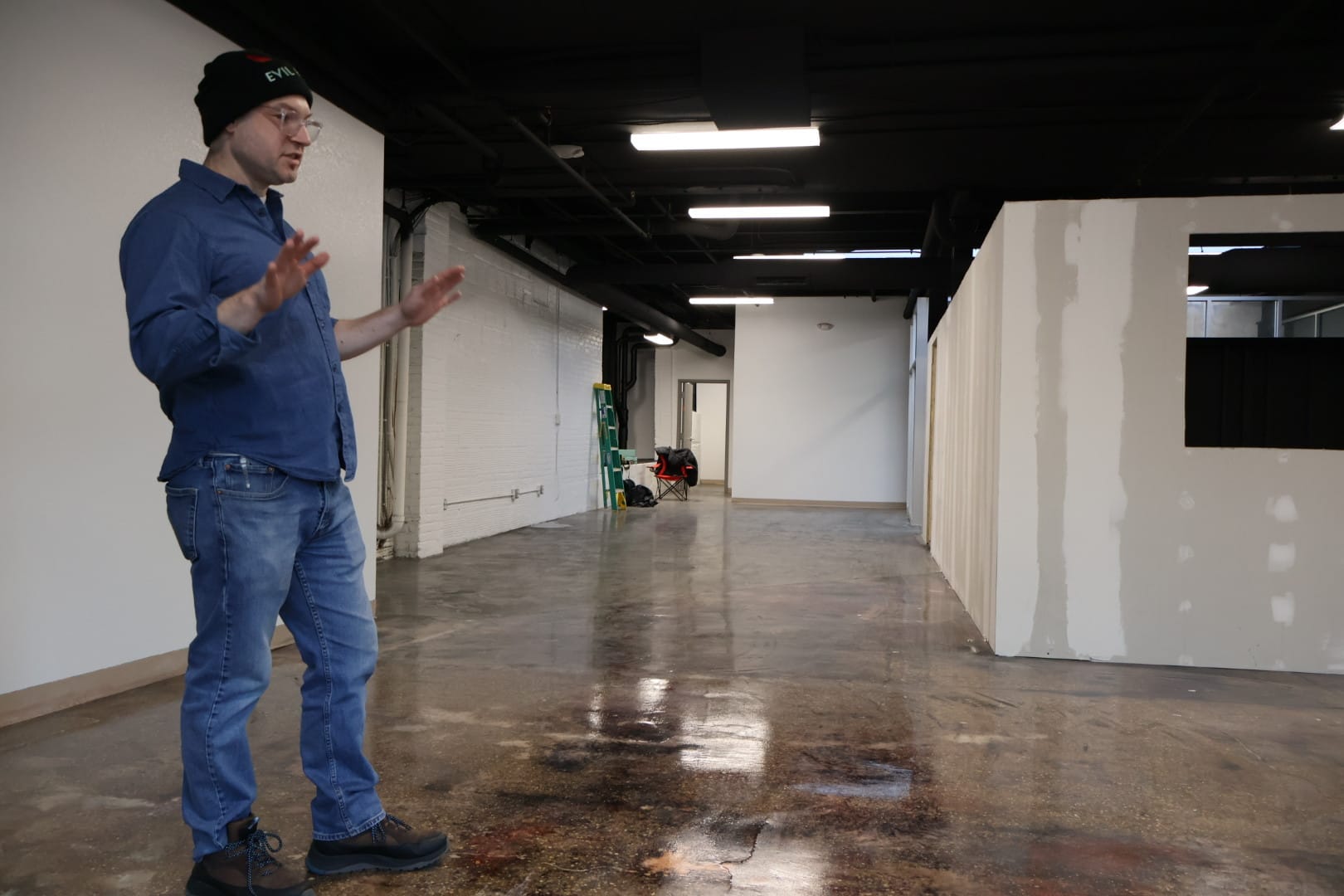
It was a gloomy afternoon last December when I met Gibes for the first time, at the old tannery building that would eventually house his store. He exuded a warm, confident energy as he showed me around and talked about his future plans, pointing out various features like a ceiling skylight that brought in tons of natural light, a cool glassed-in office room with an aging metal door that would serve private gaming groups, and the loading dock that would make bringing in new inventory for both parts of the business easier. His vision for the space was clear to see from the beginning, when it was just newly-painted walls and a polished concrete floor.
Speaking with him later on Discord, I learned about how he got into the independent roleplaying games scene as a business owner. Rather than stumbling into the venture, Gibes had instead spent his life as a hard-working and curious person who eventually came back to support a hobby he never really left behind.
As a kid, Gibes spent hours reading fantasy books and learned first-hand about retail from his father, who owned his own business. What set him on the path towards tabletop gaming was finding his older brother’s Dungeons & Dragons material in the attic. “He had this box with this…dragon statue and these funky character sheets in it, and these weird dice," he said. "That was my first kind of exposure to it.”
Learning more about D&D, and tabletop roleplaying as a whole, Gibes couldn’t get enough and was curious about the different kinds of games and stories they could tell. “I didn’t have a lot of chances to play when I was a kid, but I was always reading books…some snatched from my older brother, so I was able to pick it up myself,” he said.
He fell in love with the hobby after playing seriously in college, and his adventures eventually inspired him to try video game design. His first job after college was testing video game projects for a small studio out of Champaign, IL, Volition, while holding out hope he might eventually get into writing. Shortly after the economic recession in 2008 hit, layoffs and closures dramatically changed life for many people across countless industries, Gibes included. He decided to attend graduate school at Georgia Tech for digital media, working alongside Celia Pearce and Ian Bogost, both well-known game designers and academics. His work focused on ethnographies of virtual worlds and exploring the environments and communities that made up those spaces. Gibes also found that he was deeply interested in data and analytics.
“I took a bit of a turn towards that after school. There was a kind of fork in the road, and I decided to go down this road of data visualizations and interface design, which is not far from games in a lot of ways,” Gibes explained. For the next 10 years, he dove into that work across several big companies, specifically with Kohl’s, which operates their national headquarters on a huge corporate campus outside of Milwaukee. Gibes described them as “a declining department store desperately trying to adapt to the digital world,” and he worked in operations and marketing for their ecommerce department. “I got a really good understanding of how retail businesses operate inside and out.”
What brought him back to his love of tabletop gaming was another massive economic and cultural trauma: the COVID-19 lockdowns in 2020. “I credit TTRPGs as one of the things that saved me during the pandemic…from the loneliness [of lockdowns] during that time when we were all stuck in our houses.” Gibes reconnected with old friends he hadn’t interacted with in years and started playing tabletop games again, now online.
Tabletop roleplaying games, specifically D&D, ballooned in success during and post-COVID lockdown, especially helped by a simultaneous boom in popularity of actual play podcasts and streams like Critical Role. While most of the money and attention is still flowing towards Hasbro, Gibes credited crowdfunding platforms like Kickstarter for enabling smaller and independent publishers to flourish. While he had historically been aware of games beyond D&D, Gibes only then realized how much the scene had expanded since he had stepped away.
“The more I explored it, the more I was blown away…I just scratched underneath the surface and found all this incredible stuff.," he said. "Why was it so hard for me to find it? Why didn't I know about it?”
This set Gibes on a journey to see if he could turn his professional skillset into a “potential opportunity,” inspired by all of the crowdfunding campaigns advertising a retailer tier for stores to stock multiple copies of games on both digital and physical shelves. He thought, at the time, that starting a store would be an opportunity for him to support people within the tabletop hobby. Tabletop Bookshelf emerged from that “spark” soon after, a cleanly designed yellow-and-black website that married both Gibes’ experience with retail businesses to his passion for games.
“I'm a kid who liked to be in the stacks in the library, and so it was a natural attraction for me to run a bookstore. I had skills that I had built up over the years that made it very feasible…for other people, it would be very difficult.”
He went into the venture clear-eyed and aware of the precarity he would be accepting: “I don’t recommend just starting up a shop. It takes a lot of work, but I had a lot of this experience. I think of it sometimes as things that…[given] the right moment, the right time and the right catalyst…started to crystallize.”
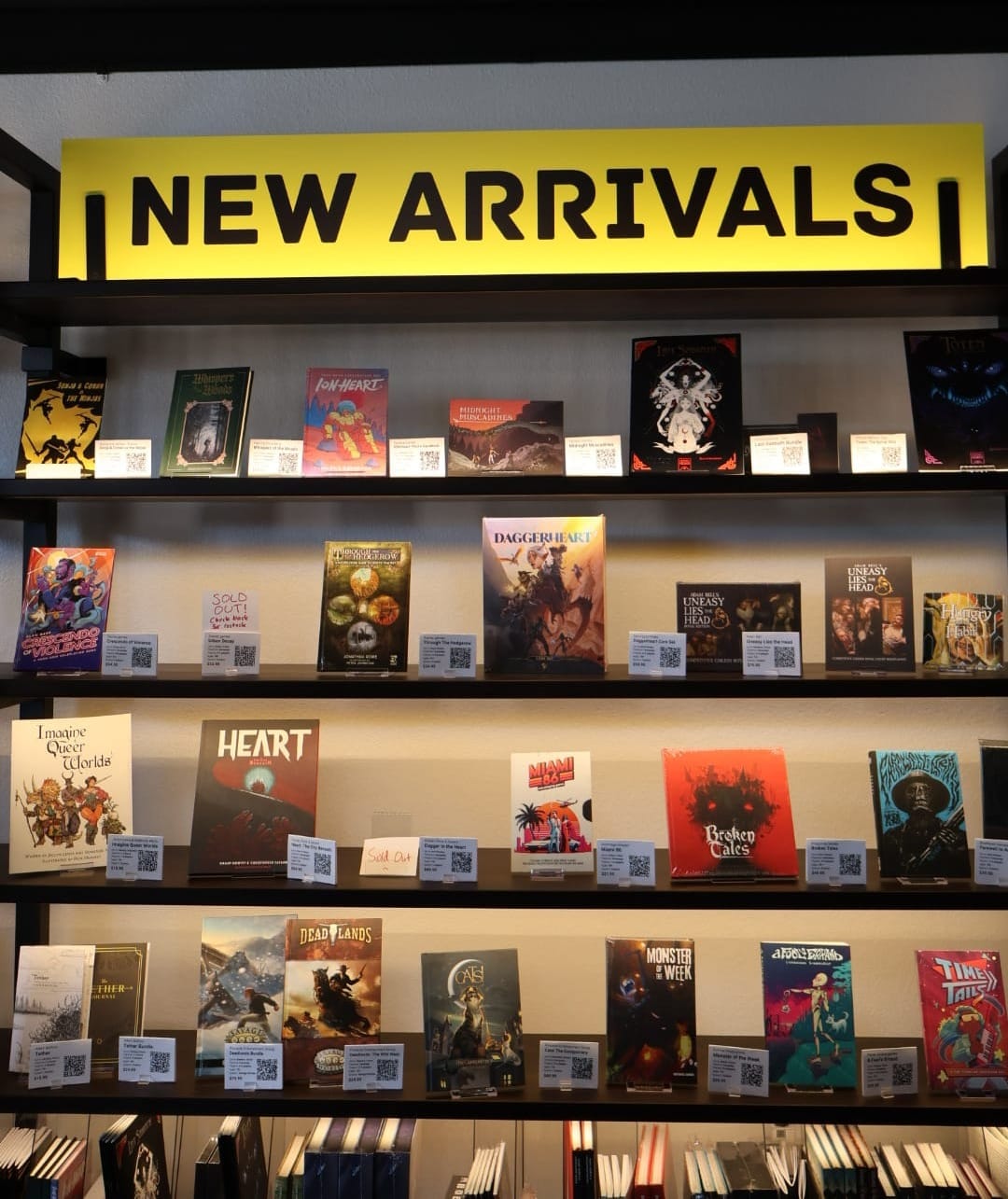
The website has flourished from when he started it in 2023, selling RPGs across a range of genres and group sizes, along with board games, accessories, and a selection of fiction and nonfiction books. Gibes largely attributes its success to a passionate customer base. “I did not expect the kind of success it has had.” Gibes said. “I did not invest a bunch of money into this…but mostly it's all driven from the interest that the community and audience has brought. I've been just trying to shepherd it.”
Gibes noted that there's a lot of emotional highs and lows with this type of business, even alongside the wins. “You have to fight through the doubts, because you have those down periods where it's like, ‘Oh, man, what am I doing wrong? This isn’t going to last for another couple months,” and then there's something that happens that you don't expect, like a title takes off and finds this evergreen quality.”
He described these moments as a kind of level up mechanic, much like in a video game, that allowed him to imagine what new places he could take the business. Even though Gibes described himself as a “risk-averse” person with a lot of anxiety about the future, it was ultimately the community’s unflagging support that “kept him confident that things are going in the right direction.”
Such statements made me curious as to what exactly inspired him to jump from a fully online ecommerce business to brick and mortar, given the investment and time involved. Gibes revealed that, while a physical shop was something he had envisioned for the future, it was a decision quickly made for him by some of the material realities of being a small business owner in tabletop gaming, especially in a climate change-impacted world.
“I had been operating the shop out of the basement of our house, which is across the street from the Menominee River. That flooded over in August [of 2025]...and a block north of me was totally wiped out. I woke up that morning and there was water 20 feet from my doorstep. I rushed downstairs because I thought the bottom shelves of the books were all going to be underwater. But luckily — I don't know why — our house was spared. We did not get a lot of water, a little bit, but not a lot of water in our basement.”
Gibes realized that it would have been heartbreaking if that flood, or any future weather events, had wiped out his entire inventory. On top of that, he had spent more than two years hauling physical books up and down his basement stairs; the cumulative stress made it clear he needed a new place.
“I could have found a warehouse in the suburbs or something like that, and just expanded the business that way…but it would be a shame to have this huge, growing collection of books and not have a place where people could go and see it in person,” Gibes said.
Gibes wanted a gaming shop that people could more easily visit, but looking for a location more centrally located in the city made the whole venture more financially perilous. He explained that, “the biggest problem is that a lot of those retail [spaces], the economics just don't work. They're really expensive locations, and they're expecting a wine store or a boutique clothing store, which just has a whole different economic model.”
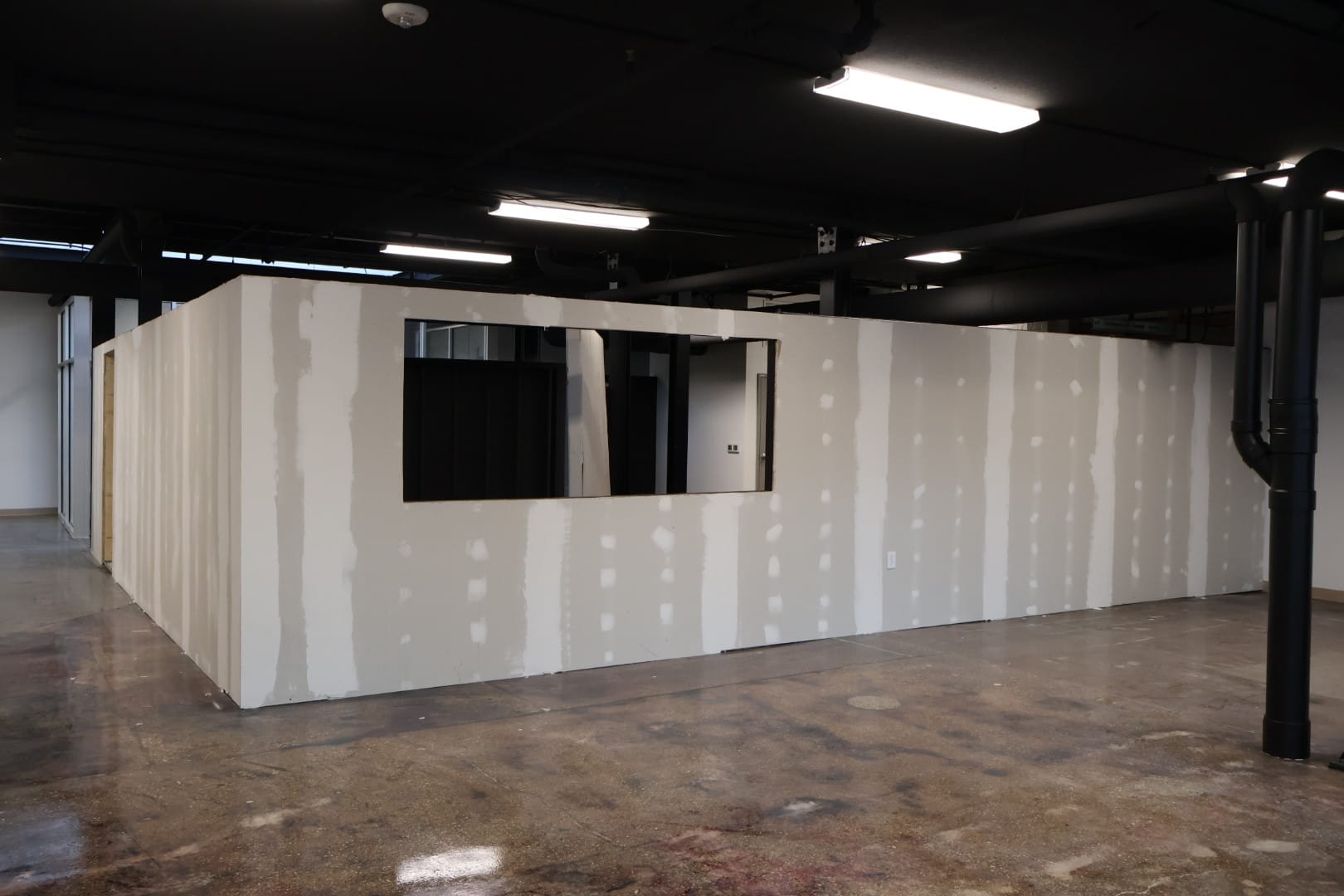
Two months later, he found a store space in the Walker’s Point neighborhood that checked all of his boxes: an old tannery building that in prior years had accomodated a florist business. It needed a lot of work, but it was within walking distance of downtown (meaning slightly cheaper rent but still with some foot traffic) and had enough square footage and a bay door to make storing and shipping physical inventory a breeze. His landlord was also invested in fixing up the space, which Gibes could then shape into what he wanted.
His vision for the store was not only to bring tabletop roleplaying to the city, but also create a unique social destination for people amidst the city’s often alcohol-oriented culture. “Wisconsin culture is very centered around alcohol…I'm excited to offer a space that doesn't have that barrier to entry to it, but will still feel comfortable for [adults]. I'm hoping that the city embraces Tabletop Bookshelf as a new kind of space to congregate.”
Gibes explained his future plans for making the store attractive to new potential patrons, like inviting various authors for signings, or starting a solo roleplaying book club. “I want to have those individual, more community-forward events…so that just keeps people coming in, keeps that culture building, and keeps people playing, having fun, and making games.”
By the end of our conversation, it was clear to me that Gibes’ goal with building up Tabletop Bookshelf focused on bringing together the independent games scene as a community, and imbuing new people with his own lifelong love of gaming. Whether he met people at conventions, or helped promote smaller publishers, it was always with that goal in mind.
“I really did start off kind of connecting with a few individual creators, but also connecting with people through crowdfunding efforts, and then just slowly building up those connections, and then building and trying to shepherd the business,” he said. Those connections, some of them now several years old, were coming back to repay his support ten-fold.
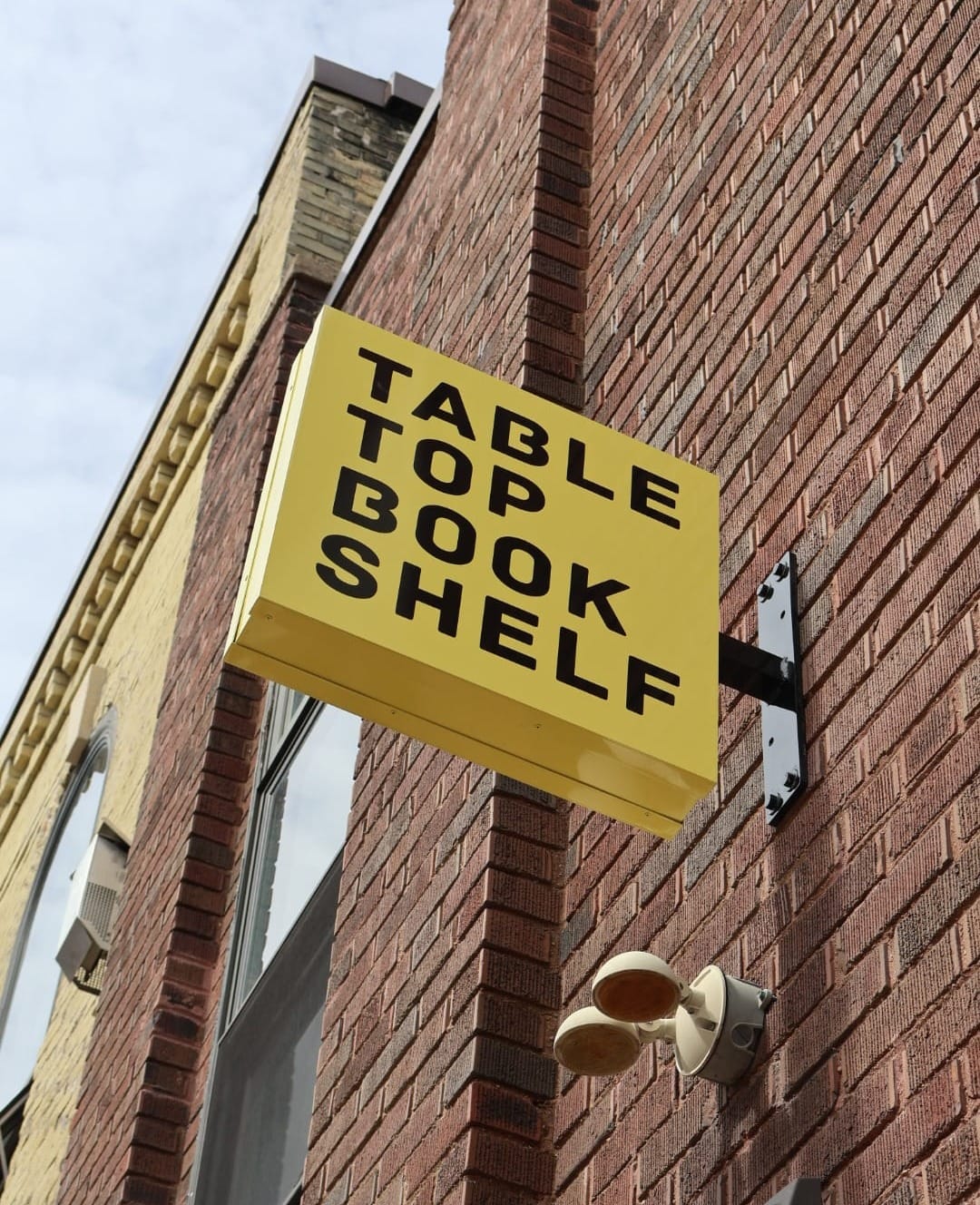
When I got off the bus back in March to attend the grand opening, I was shocked to see a line from the door back down to the corner and across the way. It was half an hour before the opening ceremony, and it already looked at least 50 people deep. I queued up with everyone else, grateful that the weather wasn’t too windy. Everyone exuded the same kind of excited, communal energy that I’ve seen at record release parties and conventions; it is that feeling that no matter how different you are, you’re all there for the same reason.
Inside, the store was tastefully designed with vivid neon yellow signage that matched the Tabletop Bookshelf website branding. There were bookshelves aplenty, tables showing off projects from individual indie publishers, a whole wing in front of the checkout area for various tabletop accoutrements like dice and character creator journals, a wall of boutique snacks, and bins of nerdy plushies.
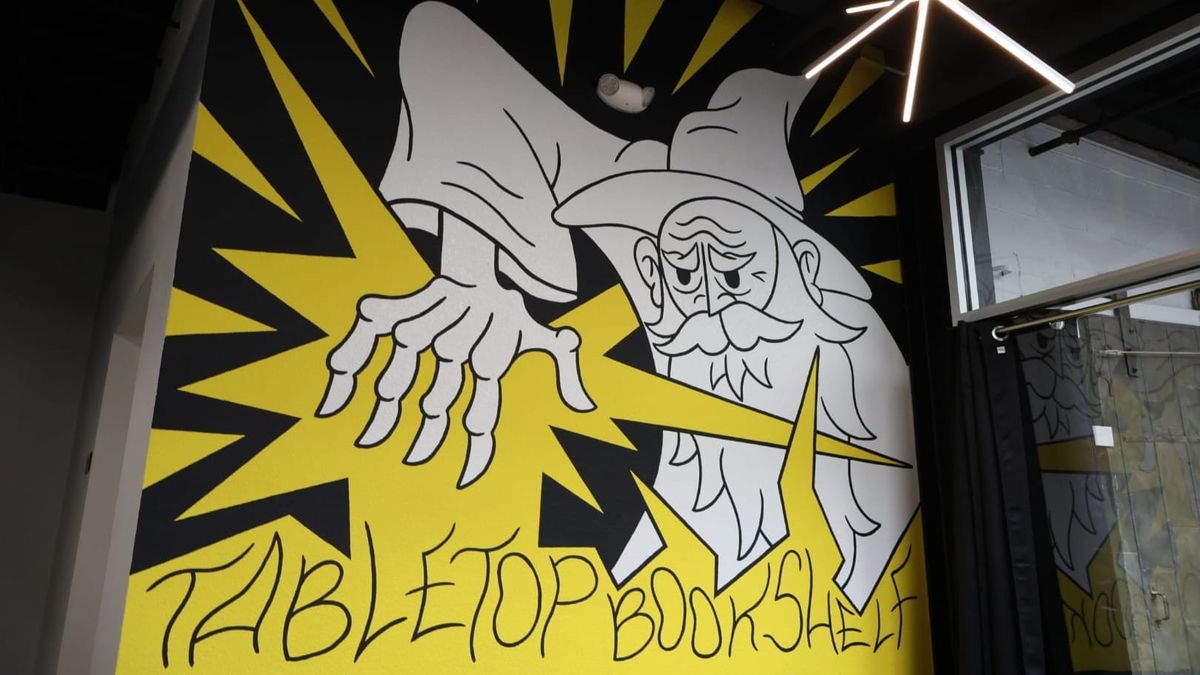
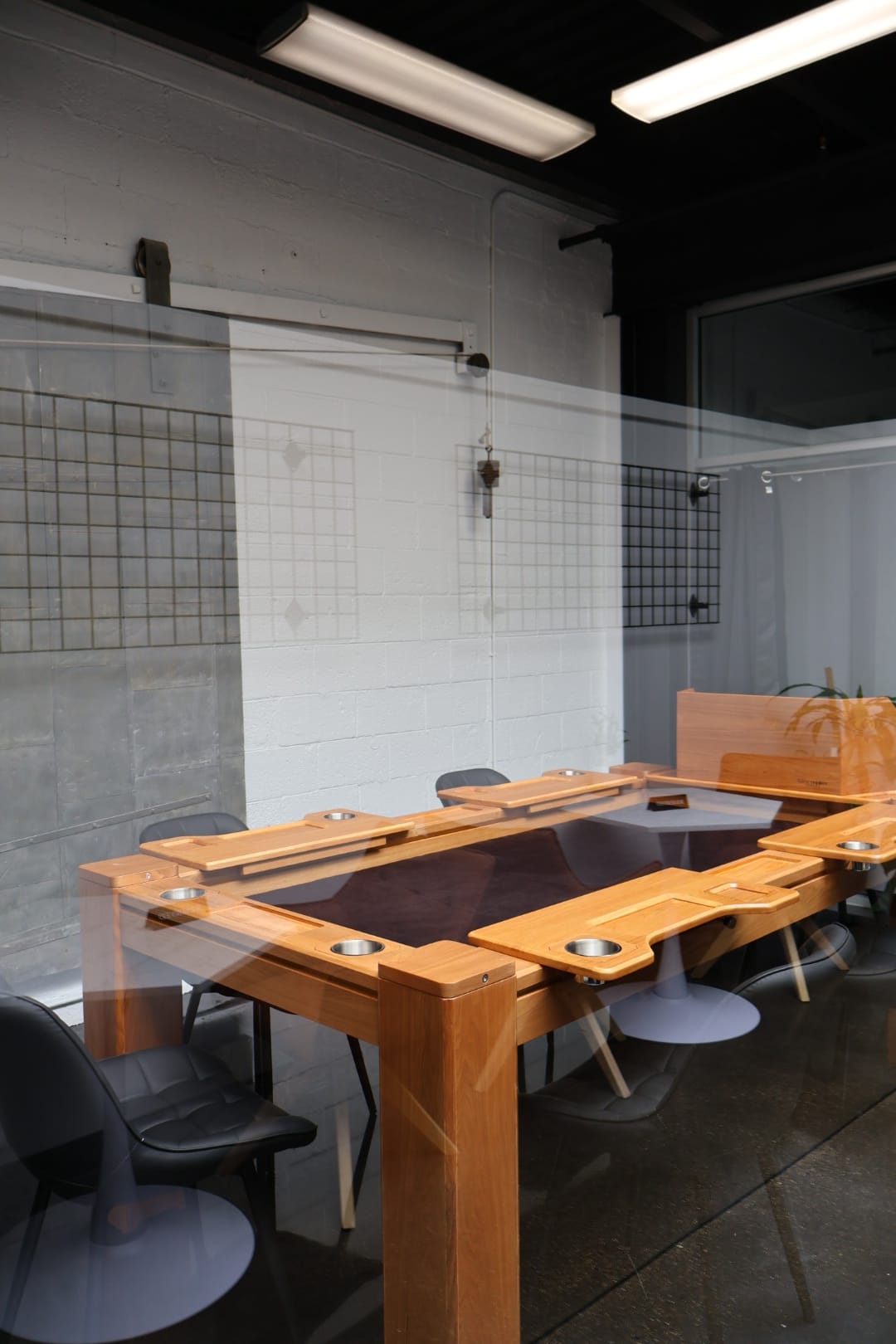
Besides offering a truly staggering array of rulebooks and manuals, the store also offered a curated selection of hard-and-softcover books that covered all sorts of geek passions: crafting guides, quirky cookbooks, romantic fiction, as well as assorted non-fiction history books. (I picked up a slim read by the late Anthony Bourdain about Typhoid Mary.) Nearer to the back, a yellow-and-black mural of a wizard towered over a couch and coffee table, opening up into the rentable spaces for customers to run games. When I purchased my book, I was given a plastic “Founding Patron” card that granted me a permanent 10% discount — an exciting prize for everyone who attended the opening.
I ended up looking at Bluesky while waiting to enter and was amazed to see quite a number of people talking online about the store opening and its resulting line. There were pictures of the sheer length as well as chatter from people who couldn’t make it there themselves but nonetheless cheered on the crowd. Plenty of indie tabletop developers came out to support Gibes, some of whom were local, like Jex Thomas (Last Pine Press), but also some like Ken Lowery (Bannerless Games) who flew in specifically to attend this event. Both of them, speaking with me via email, told me how past interactions with Gibes now compelled them to show up to Tabletop Bookshelf's launch.
Thomas has known Gibes since late 2024, around when they were crowdfunding for their game Bump in the Dark. They learned about Tabletop Bookshelf via an Instagram ad and, after realizing it was a Milwaukee business, reached out to ask if Gibes wanted to support the game at the retailer tier. On Gibes’ suggestion, Thomas ended up also bringing copies of their game to his house, so they could be added to the Bookshelf’s inventory in the basement.
For Thomas, it ended up being a fun family day. “I decided to attend the opening to support Gibes and the store. I also brought my seven-year-old daughter with me, and I was excited for her to see a different kind of game store.”
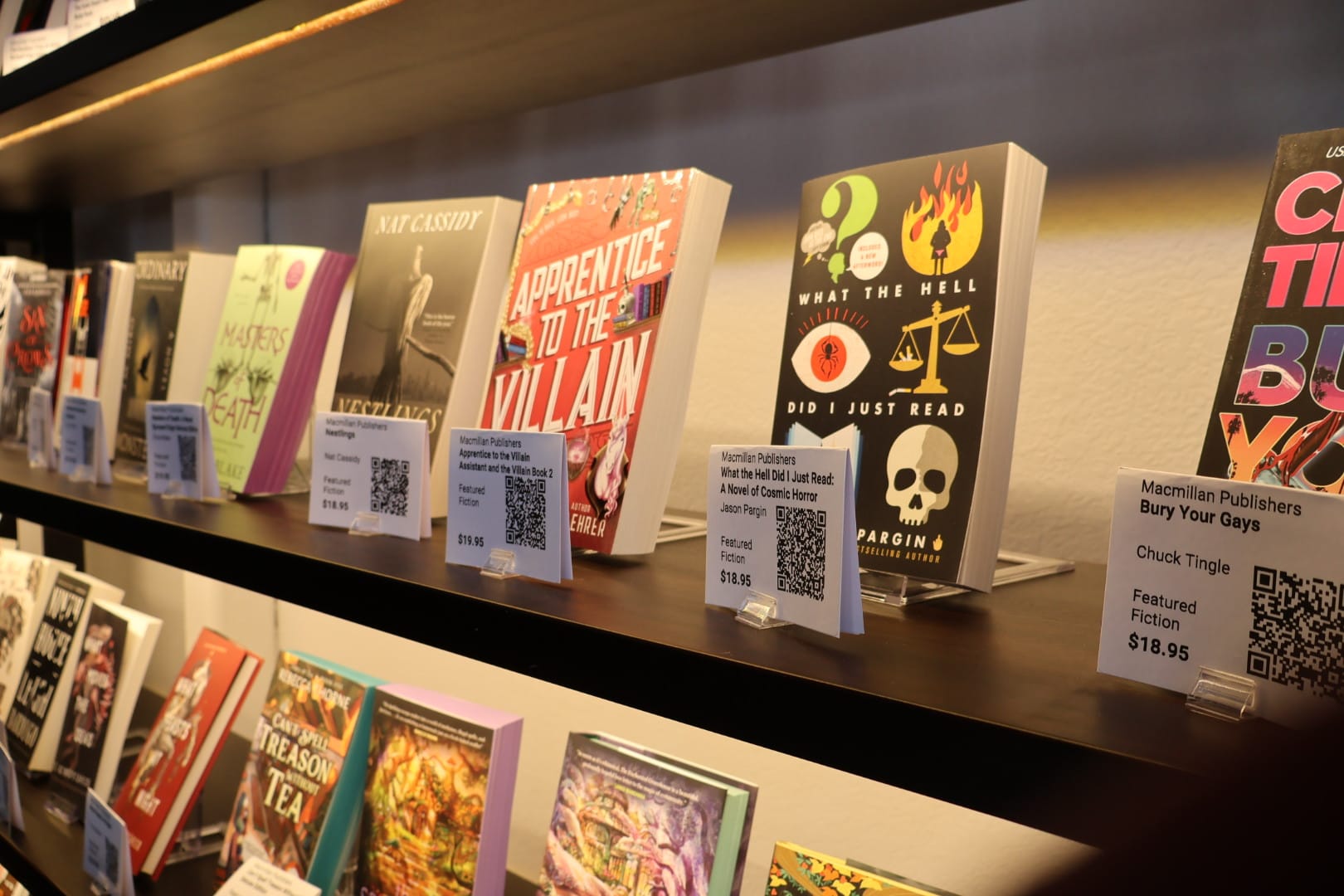
They explained that the event was well organized and that the store’s stock was “highly curated,” lending to a hip and welcoming environment. They were excited about what the milestone meant for the hobby. “There were no D&D or Pathfinder books, the stuff that takes up so much shelf space at other stores. It was all indie games, with a special focus on solo and journaling games. Those kinds of games aren't necessarily my taste, but it is really cool that a store can support itself by selling stuff that's a little more off the beaten path,” they said. “I really hope it continues to be successful.”
In Lowery's case, the writer of No-Tell Motel and Void 1980 AM travelled to the opening all the way from Texas. Lowery and Gibes have also been professionally involved since 2024, when Lowery sent sell sheets of his solo games cold to Tabletop Bookshelf’s submission form to be listed on the website.
“My wife Tatiana encouraged me to go. I'd heard about the opening awhile back just in email exchanges with Gibes…but as I saw the schedule and saw more and more creators say they would be attending, it got to be a kind of itch. I guess you'd call that ‘FOMO’.”
He explained that it was also about making good on the long-term relationship he and Gibes had. “Gibes sells a fair amount of my books, and I think it's safe to say we'd become pretty important to each other's businesses but I'd never interacted with him outside of email. All of two weeks out from opening day, Tatiana posed it as a question: why wouldn't you go? I didn't have a great answer to that. I wanted to show up for someone who'd shown up for me. I'm glad I did,” Lowery said.
Lowery also had never been to Milwaukee, so he had no idea what to expect upon arrival. “What I'd seen of the shop on social media looked handsome and thoughtfully designed, like everything Gibes does. When I saw the neighborhood I thought: well, this is a perfect fit. Old brick factories and warehouses converting over to apartments, restaurants, and shops, each seemingly locally owned and proud to say so. It's an extremely cool area."
I asked both Thomas and Lowery what it was like showing up to the opening and seeing a huge crowd; the line, while overwhelming, proved positive for both authors.
“We were in line for over an hour, which was surprising! I didn't expect the line to stretch down the block and around the corner.” Thomas explained. “But [my daughter and I] played 20 Questions and I Spy and met other people in the line, and it made the time go faster.” They continued, “I was excited by the turnout. I'll be honest, I expected a much more modest response for a new store focused on such a niche corner of the hobby. It was cool getting to know people in line with us, including meeting fellow game designer and Bluesky mutual Ethan Yen from Glyphtide Games.”
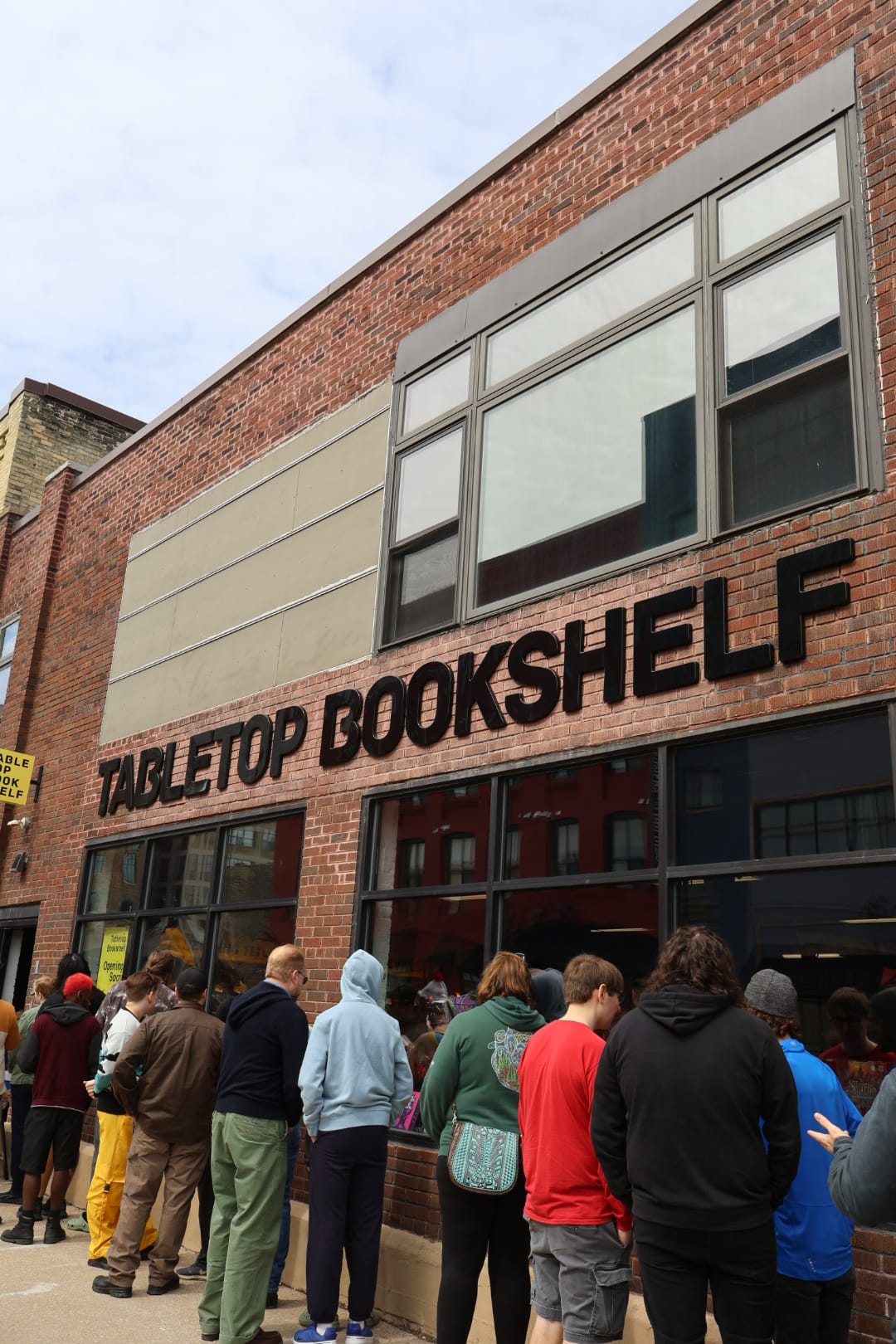
Lowery also hit the very long line, but said that he didn’t mind standing in it because of high spirits and the gorgeous weather. “The opening was noon on Saturday, and I thought, naively, I'd leave my hotel around then and just waltz right in. More the fool me.” He, like Thomas, also met other people from the scene while waiting.
“After a while I got to talking with the person next to me in line: Mike Rieman, who does layout and design. Mike knows some of the people I'd come to meet, but I didn't know their faces, and they didn't know mine. It was just kind of like that all day: meeting people I knew or knew of (and vice versa) but hadn't ever connected with in person, hitting it off, rambling around the store to pick up titles and as often as not having the designer who wrote a book sign it because they were there, too.”
It was a very affirming day for him. “I'm off in my own little world both geographically and in the kinds of games I make, so it was gratifying to find out all this community really was out there and waiting.
Thomas emphasized why it was important to visit with their children. “I like bringing my daughter and exposing her to all of these different ideas about what games can be. I am a big believer in supporting local businesses, and between Tabletop Bookshelf and Board Game Barrister, Milwaukee is becoming a destination for indie TTRPGs.”
Lowery said he continues buying from Gibes’ store online and opined that he would love to come back since he only flew in for the opening and left the next day. “I feel like I barely scratched the surface of Milwaukee itself. I would also love to see how the programming at Tabletop Bookshelf goes, with solo nights and game designer meetups and so on. This shop is a strong reminder of what this hobby is supposed to be about: sharing a table with others and coming away a better person than you were before.”
It was extremely interesting to participate in Tabletop Bookshelf's opening day as an outsider, and I reached out to Gibes after the event to get his thoughts about how it went. He mentioned that while he tried to be consistent and disciplined using social media, with small advertising campaigns and local media for public outreach, the popularity and public response were still surprising.
“Although I was hoping for a big response, the turnout definitely exceeded expectations. We had about 100 people lined up at the door…and served several hundred people over the course of the weekend.”
He also noted that he learned a real lesson about hiring the right people and taking time to train them. “I invested in recruitment, hired staff with real retail experience, and spent the week prior training them to ensure they were comfortable in the space and with the systems. It made a huge difference.”
Since then, he’s hit the ground running with all of the ideas he had dreamed up about making the store a “destination that people want to visit”, including a community gaming night, and the store’s first author signing with James D’Amato for Independent Bookstore Day. A new section of the site called “Visit Us” hosts tons of information about the physical store, and all of Tabletop Bookshelf’s social media accounts are filled with Gibes’ signature promotion of in-store games, reposts of other indie RPG makers, and, of course, his signature warm smile.
Gibes, and by extension Tabletop Bookshelf, represents the same ethos of every other indie scene I’ve been a part of: someone using their resourcefulness and passion to find a way to serve a historically underserved community, especially through hard times. He’s a true believer in people and the stories they tell; he said that goal has always been to “keep more money flowing towards those creators, without big business getting in the way.” Doing this with a brick and mortar store on top of his site is a gamble in the current economy. But Gibes has loaded his dice thanks to his kind-hearted nature and desire to see the RPG hobby welcome everyone to the table.