The Meow Wolf RPG takes the rule of cool to extremes
Designer Tiger Wizard answers questions about TAVERS, the newest vibes-heavy, rules-light game from Exalted Funeral.

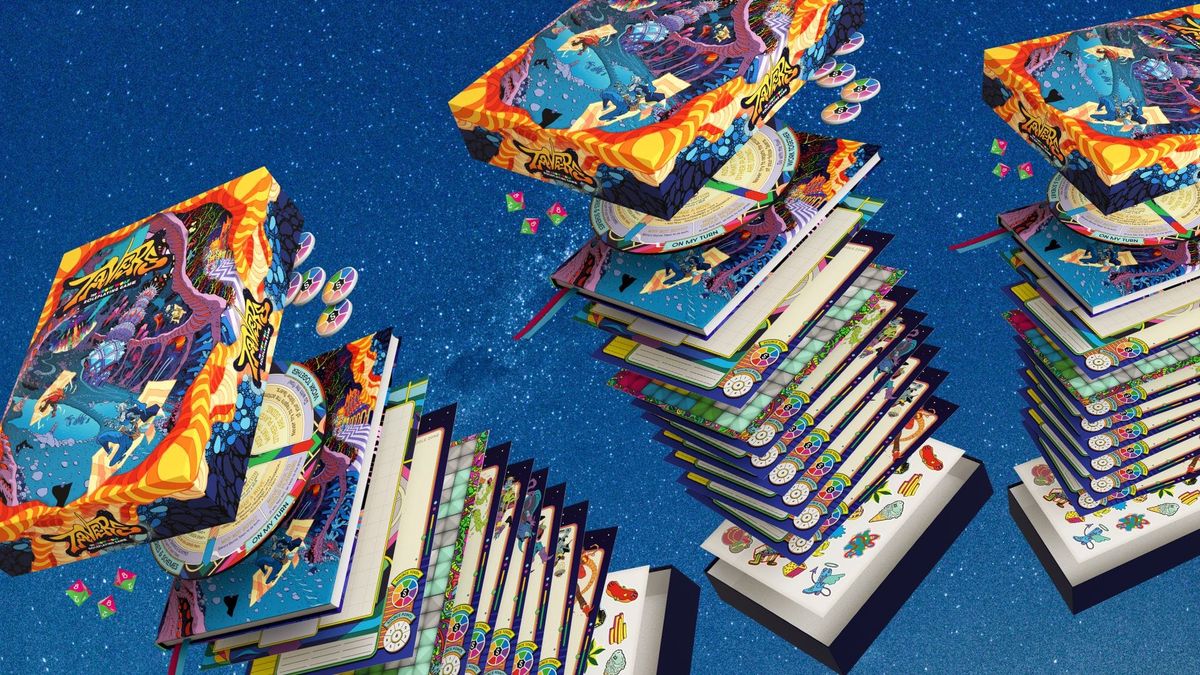
Meow Wolf is a series of artist-forward immersive experiences, which originally started in Santa Fe. It's now popped up in five cities and will be in LA and NYC later this year, and at first blush it doesn't seem like an intellectual property that would license with a tabletop game. But with playfulness, curiosity, and exploring immersive spaces at the core of Meow Wolf's ethos, the connection becomes more clear.
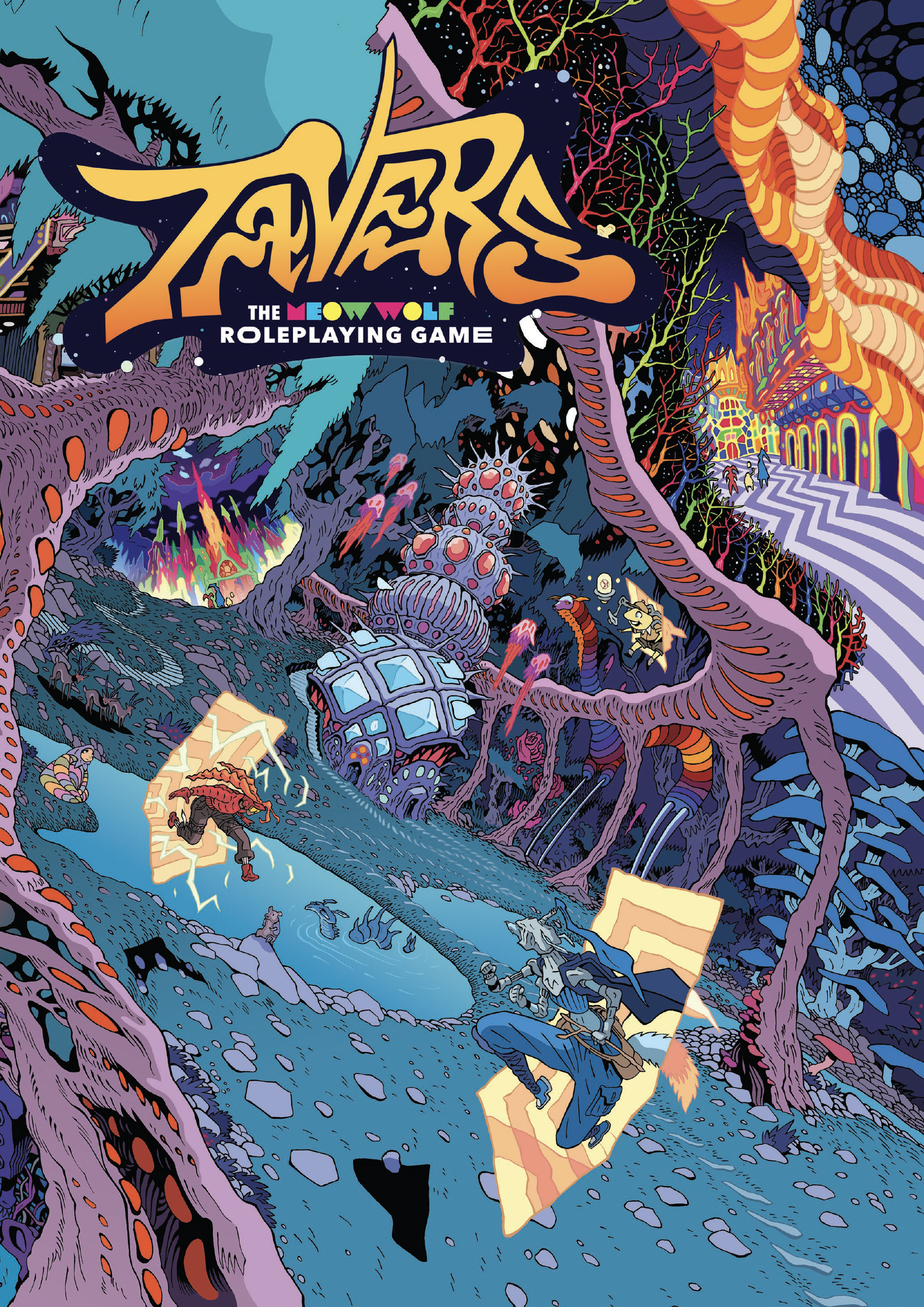
Currently, the Meow Wolf-inspired/licensed RPG is called TAVERS, and is in the last hours of a successful crowdfunding campaign. The TAVERS RPG represents an interesting break from the typical OSR-style hack and slash games that Exalted Funeral is well known for; showcasing a more narrative-focused gameplay loop and building on the zaniness of the Meow Wolf brand.
Rascal was able to set up an email interview with Tiger Wizard (also known as Andrew Bellury), the lead designer on the TAVERS RPG. Tiger Wizard is primarily an OSR designer and has been working at Exalted Funeral as a game and graphic designer. TAVERS represents his largest and most experimental foray into game design, and his responses clearly position TAVERS in curiously speculative and fascinatingly collaborative territory.
This interview has been edited for clarity.
Codega: How do Tavers ground themselves in this multi-versal world?
Tiger Wizard: Many of my answers will likely trend this direction, but the choice of how and if a character grounds themselves in some way will be up to the player, and in a way, up to the group. Everyone comes from somewhere, but you’re not explicitly required to share that information. Tavers are beings that seek to discover new peoples, places, things and ideas. New noun seekers. This exploration defines them, and the story of these discoveries shapes them.
Codega: How do you make each plane of existence unique? As they Tave their way through realities, what creates coherency? What keeps them from forgetting who they are and what they want?
Tiger Wizard: Each world that the players Tave to has some connective tissue that binds it to the last. As you travel farther and farther away from your starting point it may grow a bit thin, and yeah, you could easily forget who you are (a problem many Tavers have experienced in the past) and fade into memory. What you want however, is baked in from the start with your Taver Flavor.
Codega: What were your game design inspirations?
Tiger Wizard: The main inspiration came from the design and interaction of the Meow Wolf physical spaces. I’ve used systems and designed mechanics for TAVERS influenced heavily by: Mausritter, Tetris, Brindlewood Bay, Ironsworn, Mythic Bastionland, Fate Accelerated, Dreamland, Knave 2E, and plenty of other modern storytelling games.
Codega: There’s a lot here that seems, for lack of a better term, kind of zany and quirky. What was the thought process behind naming sessions “Episodas” vs “Episodes?” or, another example “Itemtronicals” vs. “Items” or another more standard identifier like loadout, carry, etc.
Tiger Wizard: This is pure Meow Wolfism. Taking something familiar and bonding it to another object or idea to twist it into something new, and yeah, zany. Many of these instances are Worges. (Word + Merge = Worge.) So, Episode + Soda = Episoda, because the Episodes are illustrated as bottles of soda in the Fridge of contents. We skipped the hassle of taking the meal to the table, and are eating straight from the icebox. Item + Tronical = Itemtronicals, because the process of placing your items symbolically replicates tuning an instrument, etc.
Codega: There are mentions of “lore” in this quickstart; are you going to be developing settings, scenarios, or adventures for this game?
Tiger Wizard: Meow Wolf permanent exhibit spaces are steeped in lore, and hardcore fans will appreciate easter eggs dropped into the game, but this is not a lore book. Rather, this is a tool to build your own lore within the many worlds of Meow Wolf. The core rulebook comes jam packed with 5 campaigns (we call them Episodas), plus, we’ve just unlocked a stretch goal for 5 more from a fantastic crew of guest authors.
I’ve removed a lot of lore from the book. This was an early battle I had to fight, because there is a ton of ready to use available lore for Meow Wolf, and, in theory, writing that portion of the game would have been easy and free. I wanted the core of the game to revolve around what the players create, and focus as little as possible on what already exists.
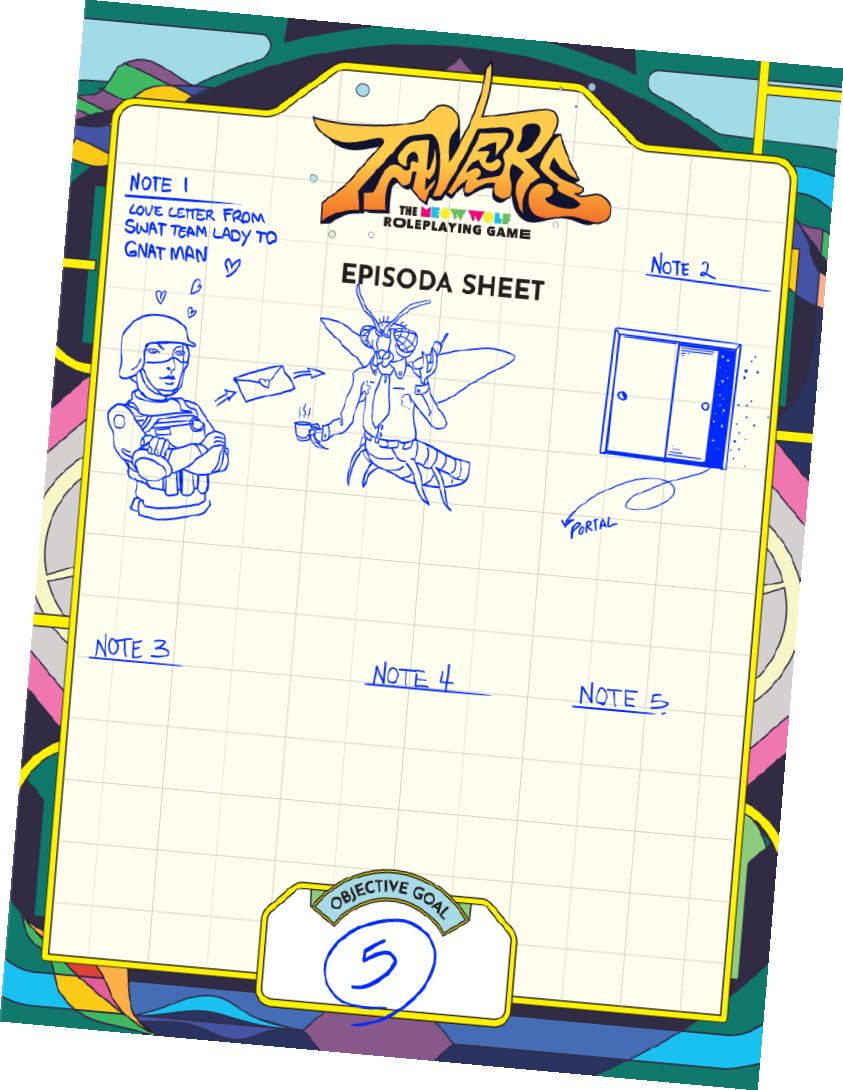
There isn’t a setting book, rather, the core book contains locations, and beings of interest (NPC’s) from some of the Meow Wolf worlds. The exploration takes place on the shared “exquisite corpse” sheet. This is similar in a lot of ways to early editions of that other game where players would draw a map of a dungeon as they enter rooms. In TAVERS however, what’s being uncovered is a story.
Codega: Can you explain how MEMs work together to create a cohesive story?
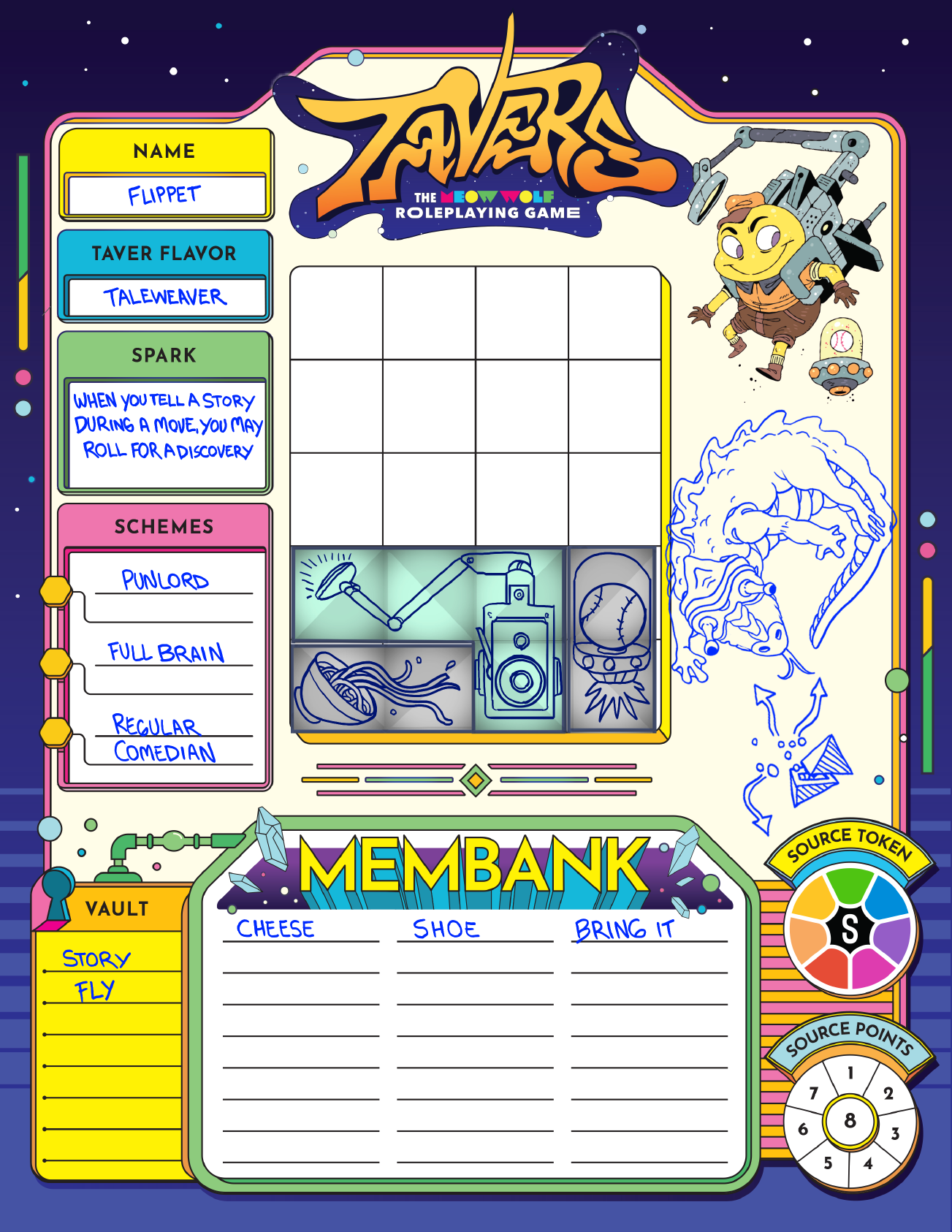
Tiger Wizard: The MEM’s are little backstory vignettes that give the individual Tavers connection to what’s happening in the story. The first group MEM connects the player characters together, but otherwise MEMventions don’t really connect to each other. They’re personal memories or dreams that provide the revolving door of skills for the players.
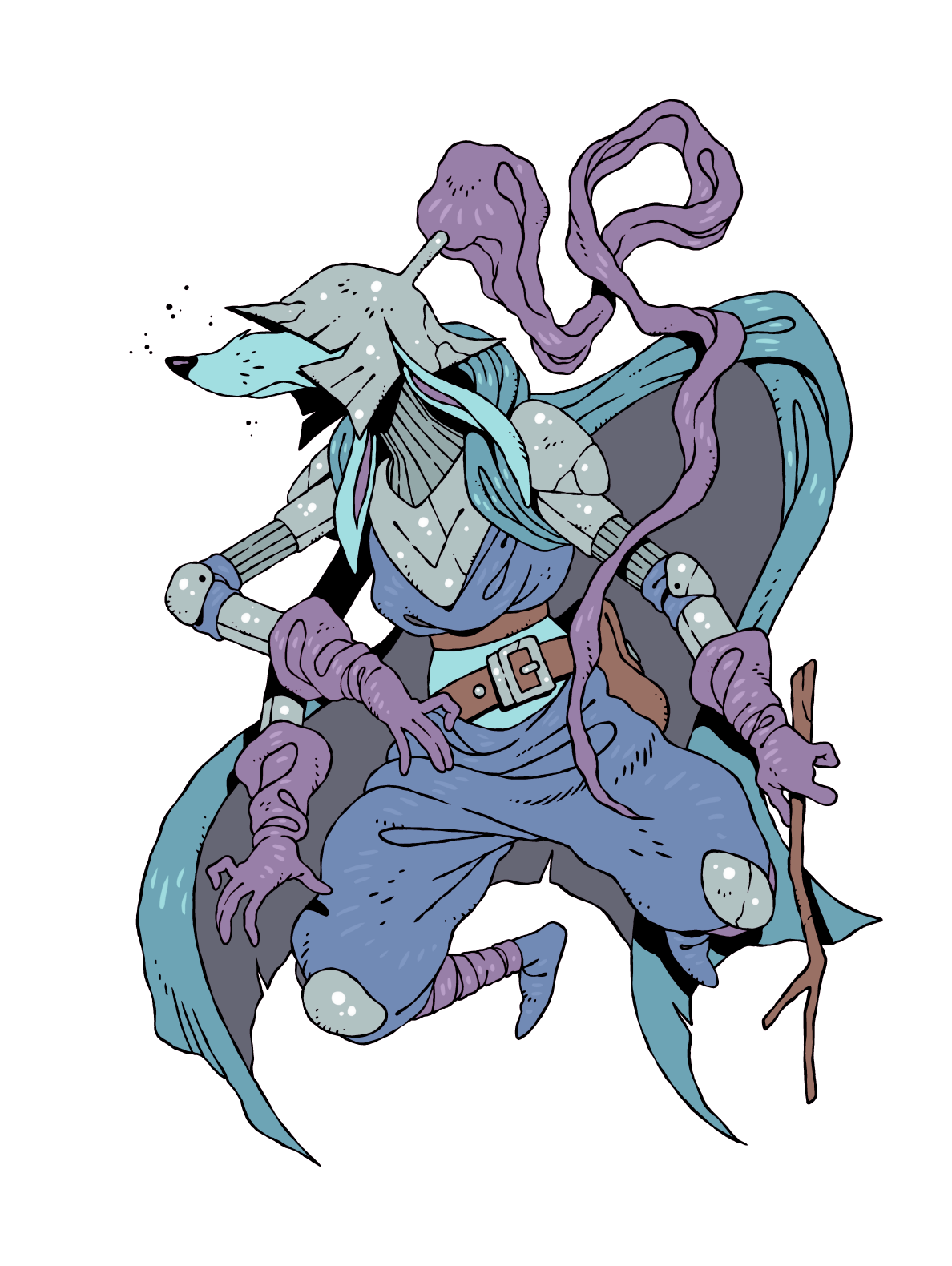
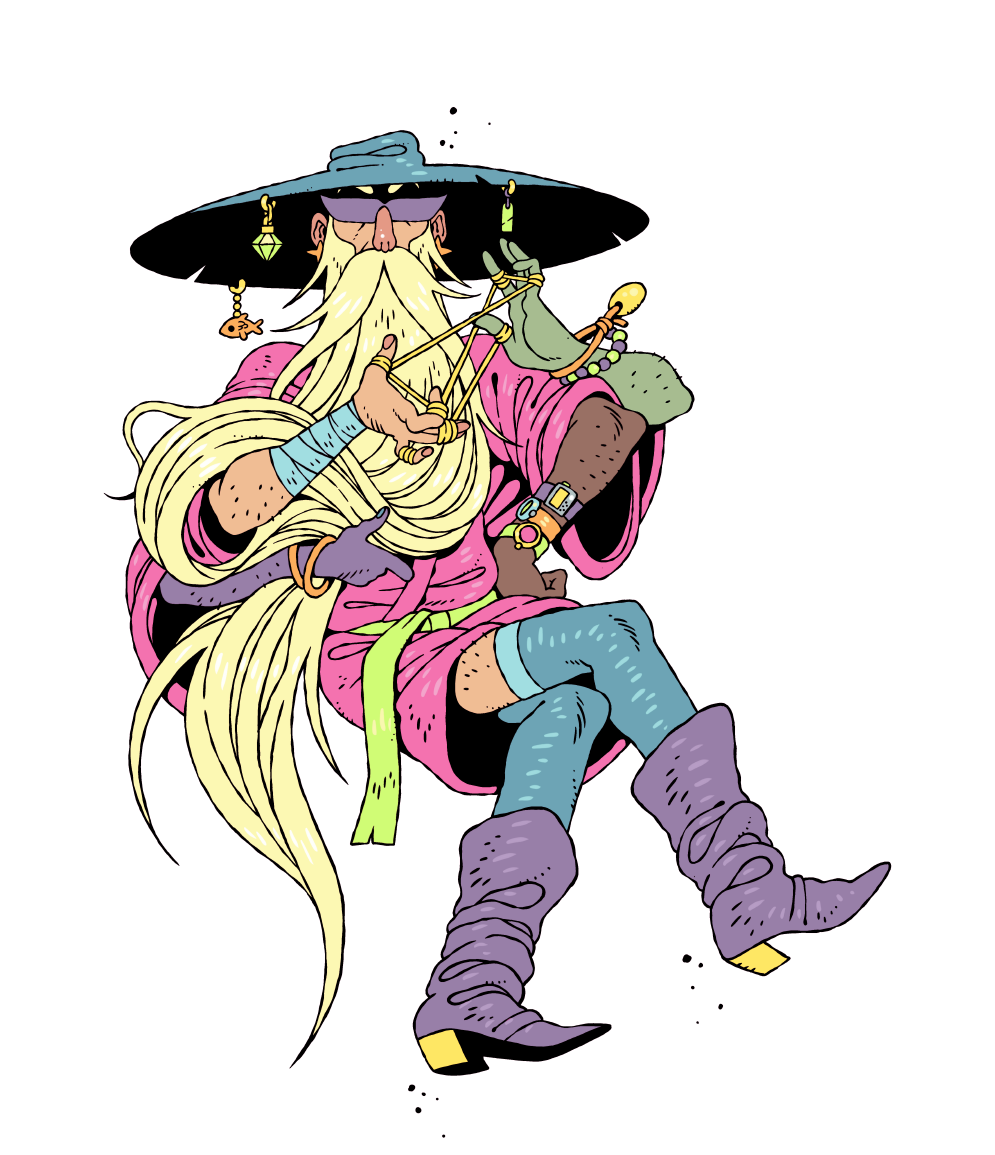
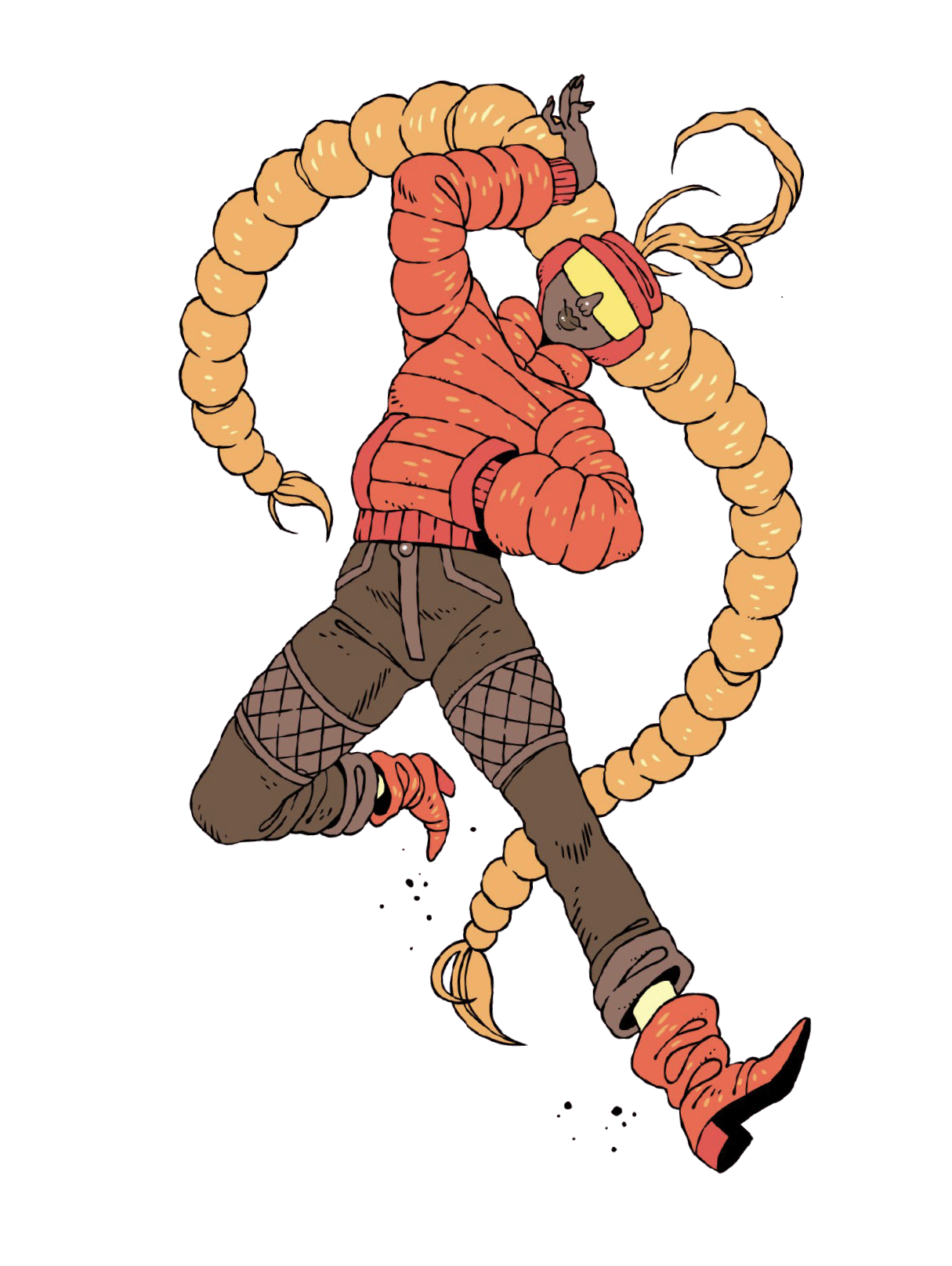
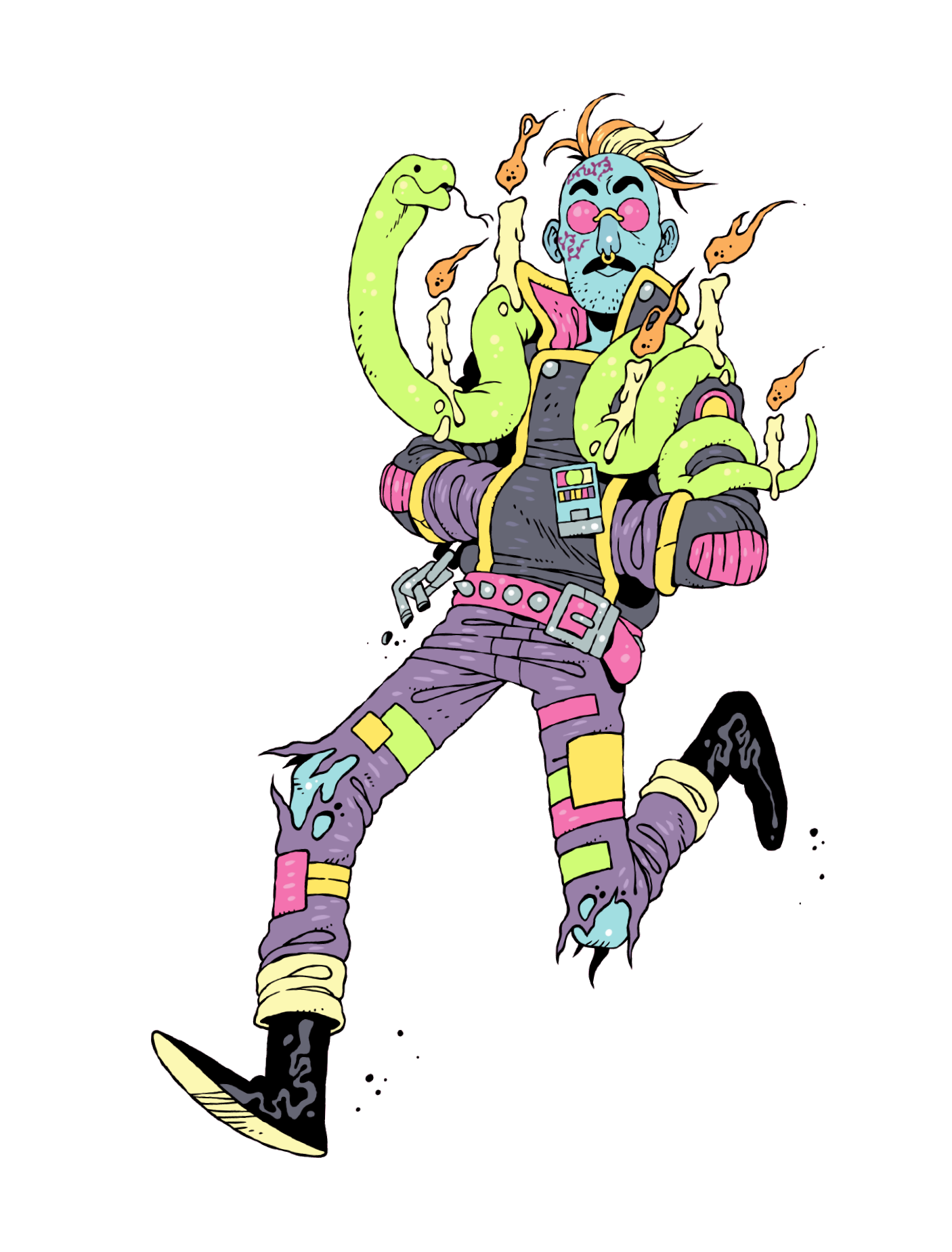
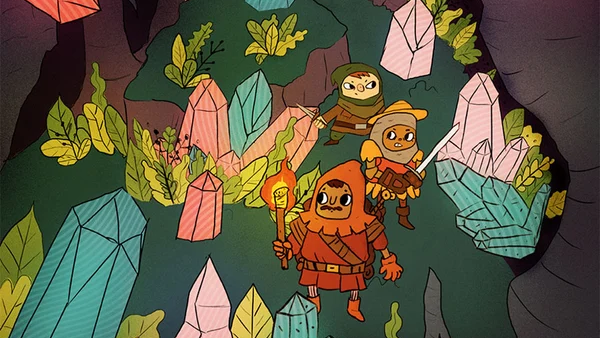
Selected character illustrations from the TAVERS quickstart; illustrations by Sam McKenzie
Codega: An earlier interview said that the storytelling would take on an “exquisite corpse” feel — can you explain that a little more?
Tiger Wizard: Sure! In addition to the collaborative flow of gameplay, there is a shared sheet that all players mark with notes and doodles. This becomes a physical representation of the story as it’s being created. It’s also a lot of fun to doodle with intention together. This sheet (called the Episoda Objective Sheet) also tracks how many objectives you’ve discovered.
Codega: It seems clear based on Source Tokens that TAVERS is intended to be a multi-session game; how do you see characters progressing in a surreal world where reality is optional?
Tiger Wizard: Players progress by completing Schemes. These are little side goals for each player to work into the story if possible. Once you’ve completed 3 schemes you can add one Fragment word to your Vault. As your Vault grows, your character becomes more defined, and your problem solving prowess blossoms.
Codega: I really liked the idea of “FLIPS” — interacting with the physical book always feels very fun to me. Are there any other examples of this kind of push and pull between immersion and metatextual interactions?
Tiger Wizard: Yes. I’m (the book) intended to be both a guide for play and a key component of play. In addition to the Flips, sometimes breaking the fourth wall, and commentating on itself, (myself?), a lot of the material rides the fence between diegetic in-world content and pun riddled meta jokes.
Codega: Why did you settle on 2D8 to roll for discoveries?
Tiger Wizard: I picked the 2d8 because I noticed a very cool similarity between the MW logo and the two dice held side by side and overlapping each other. I had been playing around with using 2d6, 2d8, 2d10 and a few options for a single die option, but as soon as I saw it, I couldn’t unsee, and built around the 2d8.
Codega: Are there additional consequences of failure beyond being unsuccessful?
Tiger Wizard: Consequences exist for all actions. Whether you roll for it or not. That sounds so extreme after writing it out. Actions provoke reactions is all I mean. Unsuccessful rolls will still provide a discovery, but they will not move your objective forward. Often these unsuccessful discoveries will add complications to the goals.
Codega: Are the Objectives of Episodas always improvised? Is there any guidance or room for planning a session, or threats?
Tiger Wizard: The players and Storyteller discover the objectives together. There are suggestions and example Discoveries that Storytellers may choose to pick from, but best practice is to decide together as a group.
The Sparks & Schemes offer the best handholds for players while traversing through an Episoda. Sparks give players character specific goals to work towards that directly impact the trajectory of the story. Schemes give characters a chance to act out player specific goals that work directly towards the characters’ growth.
An Episoda in TAVERS provides a question to be answered, a general genre vibe, and several locations to serve as the setting. Outside of those basics, every location, and interesting being in the book can, and often does, become a part of the story.
Codega: How heavy is this game on the rule of cool?
Tiger Wizard: Oganesson-level heavy.
Codega: This game seems vibes heavy and rules light. What is the most important vibe? What’s the most important rule?
Tiger Wizard: Most important vibe will be the one that resonates with the group, but the game oozes psychedelic weirdness.
I’m not sure you can call it a rule, but the suggestion to begin play with a positive and curious attitude really makes the experience more enjoyable for everyone.
Codega: What are some themes of this game? What sort of tensions will the characters be a part of? What sort of stories are you building the scaffolding for?
Tiger Wizard: Core themes include: collaboration, exploration, solving puzzles, and emergent narrative. Tavers pushes these themes past what almost every TTRPG out there utilizes them for.
Collaboration is not just having your characters work together, but the players manage, or co-direct the flow of the story through the use of the Episoda sheets. Emergent narrative takes an evolutionary baby-step forward by giving players game mechanics that reward participating in the communal storytelling, rather than just letting that be a byproduct of the core game loop.
Additional themes, and the related tensions and stories that can rise from them include: Losing your sense of self, combating corporate greed, kaiju sized hamsters destroying your city. The overarching theme is really exploration. It’s not just these beautiful spaces either. Self exploration, and exploring your own perspectives on new ideas also play into the storylines.
Codega: I really like what you said about "losing your sense of self" as a theme – how do you see that playing out?
Tiger Wizard: Losing your sense of self, or forgetting why you love, or giving up on being an artist or creative person are all synonyms for dying. In the absence of hit points or life totals your connection to source, and self become the governing factor.